

Archive for January, 2011
 
BY LAINIE STEELMAN
GATEHOUSE NEWS SERVICE
Published Nov. 21, 2010 @ 10 p.m.
On a recent Monday morning at West Prairie South Elementary in Colchester, Ill., Ray Hart, 11, used a stylus to trace a small “t” on an iPad screen. After he successfully traced the letter, the tablet computer made a cheering sound. Ray looked up at his teacher, Lori Thompson, and smiled.
Working on the iPad, which was released by Apple in April, has helped Hart dramatically improve his handwriting and boost his confidence.
“The first time I showed this to one little guy — and he is verbal — he was able to start writing letters, and that’s carried over into his paper work,” Thompson said.
Most of the students in Thompson’s special needs classroom have autism, a developmental disorder that makes communication and social interaction difficult.
“We’re always looking for new ways to help our students come up with ways to communicate and be motivated,” Thompson said. “We have another (non-verbal) student who uses an augmentative communication device that’s very heavy and bulky and hard to carry around, so we were looking for an alternative.”
Thompson’s two iPads were received after West Prairie Superintendent Jonathan Heerboth suggested the idea.
“There was an article in the San Francisco Chronicle that talked about iPads as a useful communication tool for children on the autism spectrum who could not otherwise communicate,” Heerboth said. “I knew that Mrs. Thompson had experimented with a similar idea on her iPod Touch.”
After Thompson researched the idea, an Apple sales representative met with Heerboth, Thompson and one of her students after the new school year started in August. Soon, Thompson was able to buy two iPads – at a considerably lower cost than other augmentative communication devices.
“The other devices are from $3,000 to $5,000 dollars apiece,” Thompson said. “iPads cost, depending on how much memory you get, $500 and up.”
Thompson’s non-verbal student uses the iPad with a text-to-speech application called Proloquo2Go. Using this application, Thompson’s non-verbal student can easily participate in class and answer questions by touching the appropriate icon on the iPad, which then voices a response.
“If it’s their day to be calendar helper, they can tell us,” Thompson said. “They can pick the day of the week, they can tell me what the weather is (and) they can participate in the Pledge of Allegiance all by the touch, and that’s very exciting for them.”
Another application on Hart’s iPad called ABC PocketPhonics not only teaches him how to write a letter, but it teaches him the sound. Stories2Learn teaches social cues, something kids with autism find difficult to pick up on. With this application, Thompson can create a simple story using a combination of photos and her own text that shows a specific skill, such as eye contact. If she chooses, Thompson can also narrate the stories with her own voice.
Thompson can create her own pages for the iPad. If she’s doing a lesson on spiders, for example, she can create a page about spiders in about 15 minutes.
“The apps are easy to download from iTunes and some other places as well,” Thompson said. “It’s a lot easier than some of the DynaVox (communication) systems I’m used to programming.”
Many of these applications can also be downloaded onto an iPhone or iPod Touch, and most are inexpensive. ABC PocketPhonics costs just $1.99 on iTunes, for example, and Stories2Learn is available for $13.99. Proloquo2Go, a more specialized application, costs $189.99.
The iPads stay in the classroom and do not go home with the students. They are recharged at the end of the day and, if needed, Thompson updates them with new material.
Kathy Olesen-Tracey, an educator with the Center for Application of Information Technology at Western Illinois University, said current research is showing that the use of technologies such the iPad, and even smart phones like the iPhone, improves student test scores. She cited one recent study that showed high school students who used math applications with smart phones received higher standardized test scores in math.
Tracey says “assistive technology,” like the iPad, doesn’t replace teaching in classrooms, it reinforces it.
Read in Full:Â http://www.behealthyspringfield.com/sections/local-news/autistic-students-find-help-with-ipad
 
If you haven’t given it intentional thought yet, make it a point right now to:
Stop
Take a Breath
Consider what in life you are grateful for…
It’s likely that half the people reading this right now will roll their eyes, saying, “Not that gratitude thing again.†This thought crashes down the experience to engage in something that research has proven will make us feel more satisfied with life.
Robert Emmons and Michael McCollough (2003) conducted a study a while back called Counting Blessings versus Burdens. He split up a few groups of people and had one group count 5 blessings per day, one group count 5 burdens per day and one group just write about neutral events. As you may have guessed, the ones who counted blessings, experienced less stress and more feelings associated with well being.
Thanksgiving is upon us and for some it is a time of celebration and for others it is a time of difficulty with family feuds or loneliness.
Thanksgiving by itself is not a good or bad holiday, but what it can be is a reminder to connect with some part of the good in your life.
Don’t let your automatic judgments mind enslave you and give this a shot.
Here are 5 steps to count your blessings:
- Count the blessings you have in this life. The more specific the better, rather than saying “health,†say how you feel healthy, for example, a strong heart, lungs, etc…
- Wish these blessings onto someone you care about in the form or, “May you be healthy†or whatever your blessing was.
Read More … http://www.mentalhelp.net/poc/view_doc.php?type=doc&id=41223&cn=110

 
Article Date: 23 Nov 2010 – 0:00 PST
More than 80 percent of university students are struggling with psychological distress with almost one-fifth of these classified as having a serious mental illness, according to a UQ study.
Further, the rate of psychological distress among university students surveyed (83.9 percent) is almost three times higher than in the general population (29 percent).
The study, published in the November edition of Australian Psychologist, found rates of serious mental illness among the sample (19.2 percent) were more than five times higher than in the general population (three percent).
Study author Dr Helen Stallman, a clinical psychologist and researcher with UQ’s Schools of Medicine and Pharmacy, said she was not only worried and surprised that so many students were distressed but that only one-third (34.3 percent) of the most seriously affected reported consulting a health professional.
Her study of almost 6500 Australian university students found the typical profile of a distressed student to be undergraduate students in their second, third or fourth year, and aged between 18 and 34.
Dr Stallman said the seriously affected group reported reduced capacity or total impairment for 10 days of the previous month.
The study found 83.9 percent of students surveyed reported elevated distress levels with 64.7 percent of these exhibiting mild to moderate symptoms mental illness. Only 16 percent of the sample were classified as not having any mental distress, Dr Stallman said.
Dr Stallman said of the 34.3 percent of the serious group who reported seeking help, most (67.3 percent) visited their general practitioner while only 9.3 percent consulted a psychiatrist, 20 percent a psychologist and 30.4 percent a counsellor.
The study revealed a number of protective factors associated with a lower the risk of mental health problems among students.
These included: students living in a situation where there was a higher connectedness and interrelatedness such as in university housing or with parents or a partner.
“Both life experience and experience as a student also seem to be protective factors,” Dr Stallman said.
“Older students and postgraduate students seem more resilient, perhaps because of increased coping strategies, or at postgraduate level, self-selection of students who have effective coping measures.”
Dr Stallman said the study highlighted a need for universities to be proactive in promoting the mental health and wellbeing of students in addition to specific traditionally targeted areas such as alcohol abuse.

 
Sonja Perren  , Julian Dooley , Therese Shaw and Donna Cross
Child and Adolescent Psychiatry and Mental Health 2010, 4:28doi:10.1186/1753-2000-4-28
| Â | |
| Published: | 23 November 2010 |
Abstract (provisional)
Background
Cyber-bullying (i.e., bullying via electronic means) has emerged as a new form of bullying that presents unique challenges to those victimised. Recent studies have demonstrated that there is a significant conceptual and practical overlap between both types of bullying such that most young people who are cyber-bullied also tend to be bullied by more traditional methods. Despite the overlap between traditional and cyber forms of bullying, it remains unclear if being a victim of cyber-bullying has the same negative consequences as being a victim of traditional bullying.
Method
The current study investigated associations between cyber versus traditional bullying and depressive symptoms in 374 and 1320 students from Switzerland and Australia respectively (52% female; Age: M = 13.8, SD = 1.0). All participants completed a bullying questionnaire (assessing perpetration and victimisation of traditional and cyber forms of bullying behaviour) in addition to scales on depressive symptoms.
Results
Across both samples, traditional victims and bully-victims reported more depressive symptoms than bullies and non-involved children. Importantly, victims of cyber-bullying reported significantly higher levels of depressive symptoms, even when controlling for the involvement in traditional bullying/victimisation.
Conclusions
Overall, cyber-victimisation emerged as an additional risk factor for depressive symptoms in adolescents involved in bullying.
The complete article is available as a provisional PDF. The fully formatted PDF and HTML versions are in production.
http://www.capmh.com/content/4/1/28

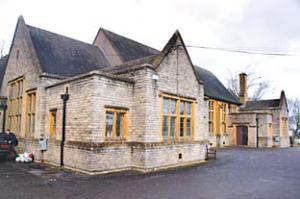
The New Elizabethan School, Hartlebury
A SCHOOL saved from closure by a worried parent is hoping to become Worcestershire’s first free school.
The New Elizabethan School in Hartlebury, near Kidderminster, which currently offers specialist provision for gifted and talented pupils and for children with ADHD, dyslexia, dyspraxia, and ASD is taking its place at the forefront of the county’s free school movement.
If its plans are accepted by the Government the school, which currently charges about £2,500 per child per term, would provide specialist education for 100 pupils free of charge.
Source:Â http://www.worcesternews.co.uk/news/8677358.Now_saved_school_wants__free__status/

Page Last Updated: Saturday November 20, 2010 12:00am PST
A Washoe County school bus driver has been fired and an aide is on probation after an incident on a special needs school bus involving a 6 year old student who has autism.
A videotape shows the bus driver and the aide covering the child’s face with a rag after she began spitting on the bus.
After almost a month long investigation the school district fired the driver yesterday, but the student’s parents say more needs to be done and they are pressing for criminal charges to be filed.
“It was really disturbing for me, because you see my daughter begging for her mother while the bus driver is repeatedly insisting she’s going to the police.” said Jeremy Hagblom, 6 year old Tierstan Hagblom’s father.
Hagblom says he and his wife were shocked to see what happened to their daughter on the school bus home from Caughlin Ranch Elementary School on October 22nd.
“On that tape the bus driver and aide were trying to stop my daughter from spitting by repeatedly placing a rag over her face, nose and her eyes.”
In a school district incident report…the driver says quote, “we just want to protect other students from contamination from her since we don’t know if she has any issues about health, such as hepatitis or HIV.”
Tierstan was having a “stimming” episode something that happens to children with autism when they are overstimulated or upset.
Her father says they were notified an incident had taken place by the district over the phone that afternoon, but he became much more concerned after seeing the video from the bus almost two weeks later.
“I feel like the video was more serious than the picture painted over the phone.”
Hagblom says not only did the employees make the wrong call with the rag over his daughter’s face, he says she is still traumatized by the verbal threats that were made as well about the police.
“I feel like she’s been acting out more. In addition, occasionally we’re still getting the question whether or not she’s going to be arrested. She doesn’t know how to process that information.”
The Washoe County School District says the bus driver was removed immediately from his job the day after the incident, and was officially terminated yesterday for his actions.
“In our opinion there wasn’t intent to hurt the child in any way and again in some ways we looked at the situation and the driver was trying to protect other kids, just making some real poor choices,” said senior administrator Rick Harris.
Harris says both the district’s legal department and school police investigated the incident over the last few weeks and found no cause for criminal charges to be filed.
He says school bus drivers are thoroughly trained and this incident was extremely unfortunate and unusual.
“Between fifteen to 30 thousand kids ride buses everyday, 99 percent of the time the drivers make good choices unfortunately in this instance the choice was not good.”
The Hagbloms are happy to hear the bus driver has been fired and the aide put on probation, but still would like to see the driver prosecuted for assault.
Read in Full/View Video:Â http://www.mynews4.com/story.php?id=32495&n=122
 
When you’re feeling anxious and depressed, your self-confidence takes a nosedive. You don’t feel up to facing any challenges or pushing yourself beyond your comfort zone. You tell yourself that once you start feeling better and more confident, then you’ll be ready to conquer your fears.
The tricky part is that we’re never really “ready†to face our fears. Instead, we have to muster up the courage to push ourselves towards our fears. Once we do this, the confidence flows like a waterfall!
I’ll say it loud and clear: Voluntarily facing your fears is the BEST way to build self-confidence and belief in yourself.
Here’s an example from my life…to conquer my fear of riding crowded trains at rush hour in Chicago, I started small. I began riding the train just a few stops over my lunch break when it was mostly empty. I gradually increased the difficulty over several weeks, riding trains with more passengers for longer rides, building my confidence. Eventually, I graduated to riding packed trains at rush hour with little difficulty.
The day may never come when you wake up and magically feel up to finally facing your greatest fears. It just doesn’t work that way. Instead, start pushing yourself beyond your comfort zone every day taking baby steps. Each small victory conjures up positive feelings and belief in yourself, which continues to build as you repeat this process and tackle more challenging situations.
Read in Full:Â http://www.mentalhelp.net/poc/view_doc.php?type=doc&id=41058&cn=1
 
Some 75m books on vinyl, cassette and now special compressed CD, have been issued free to more than 2 million people with sight problems
The Guardian, Wednesday 10 November 2010
It was soldiers who lost their sight during the first world war and complained that learning to read using Braille was difficult that spurred the RNIB to come up with its Talking Book service. This week, the service celebrates its 75th anniversary. The first titles, The Murder of Roger Ackroyd, by Agatha Christie, and Typhoon, by Joseph Conrad, recorded on 12-inch shellac gramophone records were sent out by the charity supporting blind and partially sighted people on 7 November1935.
The records played at 24 revolutions per minute, rather than the then standard 75 rpm, so that 25 minutes of speech could be crammed on each side. Even so, a typical novel required 10 double-sided discs.
The Society of Authors and the Society of Publishers lent the service their support to avoid copyright problems and the Post Office granted cheap postage rates. By September 1937, 966 specialist 24 rpm players had been sent out to readers with 42 new titles recorded.
Since then, around 75m books on vinyl, cassette and now special compressed CD, have been issued free to more than 2 million people. The most popular authors include JK Rowling, James Patterson, Agatha Christie, Danielle Steel, John Grisham and Jodi Picoult. Over the last 12 months Wolf Hall, by Hilary Mantel, Dear Fatty, by Dawn French, and How to Cheat at Cooking, by Delia Smith, were among the most popular listens.
Read in Full:Â http://www.guardian.co.uk/society/2010/nov/10/rnib-talking-books-anniversary
Â


Â
AN APPLICATION developed in Ireland to help children with autism to communicate has won a prestigious mobile content award.
Â
The Grace App was the idea of Lisa Domican, a mother of two children with autism, and teamed with Steven Troughton-Smith to develop the application, which can be used on an iPhone, iPod Touch or iPad. The app is named after Ms Domican’s daughter.
The system allows the children to communicate, building sentences through a book of laminated pictures that are attached to a board by velcro.
Â
Grace App, which is available on Apple’s store worldwide, has already won an award at this year’s Irish Web Awards, where it was named best mobile app. It has sold more than 600 copies since it went on sale almost a year ago.
“It stands out as a brilliant combination of technology and innovation with real purpose,†he said. “It’s wonderful to see its success in the WSA awards and reiterates its brilliance.â€
Â
Source:Â
http://www.irishtimes.com/newspaper/finance/2010/1112/1224283151588.html
 
At 8 p.m. Saturday, Southwest Airlines Flight 2149 was poised to push back from the gate. Flight attendants gave fasten-seat-belt instructions, and First Officer Peter Hayes announced, “There’s 25 minutes of flight time until we touch down in Philadelphia.”
Capt. Todd Siems said the Boeing airliner was cruising at 37,000 feet. And after he turned off the seat-belt sign, the young passengers were served complimentary Sprite, cranberry-apple juice, and airplane-shaped crackers.
Flight 2149 never left the gate at Philadelphia International Airport, though. It was no ordinary flight, but rather a practice for children with autism and their families to become familiar with travel at the airport – bags, getting boarding passes, going through security, waiting at the gate, and sitting on the plane to experience the lights and sounds.
“I’m going to China, but we won’t really,” said an imaginative Gena Catanese, 5, of North Wales, accompanied by her parents and her sisters, Isabella, 6, and Emma, 3.
Just 18 months ago, Gena had a traumatic travel experience on vacation in Orlando, Fla. She expected to preboard the plane with her family, but the protocol was she could preboard only with one parent.
Gena became agitated and “overstimulated,” said her mother, Melanie Catanese. “There was no way she was able to fly home that day.”
After receiving a frantic call, Gena’s pediatrician, Wendy Ross, at Albert Einstein Medical Center, phoned and faxed letters to the Orlando airport.
“I thought, ‘This can never happen to one of my families again,’ ” said Ross, who sees children with learning disabilities, mental retardation, autism, and attention-deficit disorder. “Gena was saying she would never fly again. It was heartbreaking.”
So Ross contacted Philadelphia airport and Rick Dempsey, head of the airport’s Americans With Disabilities Act review committee.

“She wanted to bring a simulated airport experience for children with autism and their families,” Dempsey said. “The committee thought it was a great idea. The [Transportation Security Administration] bought into it. We even got an airline, Southwest, to buy into the idea.”
Since then, there have been three “mock” flights.
“We asked the crews if they would mind sticking around for 30 to 40 minutes and go through a mock turnaround on a flight, as if we were flying somewhere,” said John Minor, Southwest’s station manager here.
“We let them know that autistic children are very literal, so we don’t want to say, ‘We’re flying to Disneyland,’ ” Minor said. “We just say, ‘This is a test run.’ “
Frontier Airlines plans a simulated flight for autistic children Dec. 11; US Airways Group has one planned for January. British Airways also has expressed interest.
In the spring, Ross trained 130 airport and airline employees on autism, which is diagnosed in one in 100 children annually.
“It’s not something you outgrow, but if you get really good therapy, you can cope better, compensate better,” Ross said. “My concern is that so many families do not go out into the community. It’s unrealistic to think that these kids are going to be employable one day if they are not comfortable being in community venues as they grow up.”
Ross went to Einstein four years ago from Children’s Hospital in Boston and teamed up with psychologists, a speech and language pathologist, and occupational therapist Roger Ideishi from University of the Sciences to start programs for autistic children at the Please Touch Museum, Garden State Discovery Museum, Adventure Aquarium, and the Academy of Natural Sciences.
“Currently, we are consulting with the Smithsonian,” she said.
Autistic children have difficulty with communication and socialization, and oversensitivity to sensory information and transition, Ross said. “New or unexpected things that have lights, sounds, movement can make them more likely to get upset or have a tantrum.”
Her goal is to expand Philadelphia’s program to airports nationwide, “everything from curb to cabin and back.”
Read in Full:Â http://www.philly.com/philly/business/20101116_Children_with_autism_practice_traveling_on__mock__flights.html