 )
- The Guardian, Tuesday November 11 2008


First Published Wednesday, 5 November 2008

A4 Update 2008 (October), Vol 6. No. 8
Links to the latest A4 Update are on the webpage http://a4.org.au/a4/updates/2008. The links to download the files are:
| MS Word |
http://a4.org.au/a4/webfm_send/102 |
| PDF |
http://a4.org.au/a4/webfm_send/103
|
Previous A4 Updates are available for downloading from the A4 website (see http://a4.org.au/a4/publications).
A4 has a new website. Please check it out … and it would be great if you re-register with A4 on the new website.
Some of you may be interested in (temporary) free access to some of the recently published research into autism. If you are interested you can follow this link and take up their offer … Read it online!
Research News
A Current Affair will air an interview with Josephine Barbaro (PhD student) and Dr Cheryl Dissanayake on their “Social Attention and Communication Study†tomorrow (Thursday) at 6.30pm.
Jan
7

HEADLINES

“UKAF congratulates President Elect Obamaâ€:
http://www.bloggernews.net/118491
“Barack Obama and Joe Biden – Supporting Americans with ASDâ€:
www.barackobama.com/pdf/AutismSpectrumDisorders.pdf
“Missing Xbox runaway Brandon Crisp found deadâ€:
http://www.news.com.au/technology/story/0,25642,24610280-5014239,00.html
“Parents fear internet addictionâ€:
http://www.thestar.com/article/523702
“Children in care druggedâ€:
http://www.theaustralian.news.com.au/story/0,25197,24591922-601,00.html
“Doctor barred from Australia because of Down syndrome sonâ€:
“Chorus of demands to let doctor Bernhard Moeller stayâ€:
http://www.theaustralian.news.com.au/story/0,25197,24584089-23289,00.html
“Torfield teachers trip to Russiaâ€:
http://www.ryeandbattleobserver.co.uk/news/Torfield-teachers-trip-to-Russia.4663366.jp
“Major initiative on poverty and autism in the UKâ€:
http://www.medicalnewstoday.com/articles/127852.php
“Treehouse supports the UN Convention on Rights of People with Disabilitiesâ€:
“The inaugural Annual Treehouse Lecture: “Are we ambitious enough about autism?â€:
“Single vaccine safety warningsâ€:
http://news.bbc.co.uk/1/hi/health/7689901.stm
“Clarke backs bid for better deal for autistic peopleâ€:
UK “Elaine Hill appointed as the new specialist advisor for autismâ€:
http://pr-canada.net/index.php?option=com_content&task=view&id=58098&Itemid=61
“I Exist campaign win: Department of Health appoints new specialist advisor for autismâ€:
http://www.nas.org.uk/nas/jsp/polopoly.jsp?d=253&a=17877
“Benefit changes come into forceâ€:
http://uk.news.yahoo.com/11/20081027/tpl-benefit-changes-come-into-force-0a1c1a1.html
“Looking for a home for special needs play centreâ€:
http://www.getsurrey.co.uk/news/s/2038237_looking_for_a_home_for_special_needs_play_centre
“City set to ban the mosquitoâ€:
http://www.thisisplymouth.co.uk/news/City-set-ban-mosquito/article-428116-detail/article.html
Gary McKinnon “Calls grow to save autistic Scots hacker from threat of US prisonâ€:
http://thescotsman.scotsman.com/scotland/Calls-grow-to-save-.4643340.jp
“Cross-party attemt to fight extradition of British hackerâ€:
http://www.guardian.co.uk/politics/2008/nov/03/gary-kinnon-hacker-aspergers-extradition
“Appeals made to prevent hacker being extraditedâ€:
http://www.scmagazineuk.com/Appeals-made-to-prevent-hacker-being-extradited/article/120151/
“Hacker too sick for US extraditionâ€:
http://www.policeoracle.com/news/Hacker%2DToo%2DSick%2Dfor%2DUS%2DExtradition%5F17609%2Ehtml
“Jacqui Smith should be ashamed of handling of hacker caseâ€:
http://woodandvale.london24.net/woodandvale/postbag/story.aspx?brand=NorthLondon24&category=Postbagwoodandvale&tBrand=northlondon24&tCategory=postbagwoodandvale&itemid=WeED24%20Oct%202008%2015%3A30%3A26%3A703
“Understanding Adolescents Conference to be held … Topics include: promoting sexual health within the context of teen health care visits; update on the use of antipsychotics in primary care pediatrics; adolescents with autism spectrum disorders; and the teen presentation “Communicating with Teens.â€:
http://news.uky.edu/news/display_article.php?category=0&artid=4097&type=1
“New NAS branch opens in Calderdaleâ€:
http://www.nas.org.uk/nas/jsp/polopoly.jsp?d=253&a=17804
“New autism support group to launch in Stratford-upon-Avonâ€:
http://www.nas.org.uk/nas/jsp/polopoly.jsp?d=253&a=17895
“help! at hand for parents of autistic children in Sandbach: free support programmeâ€:
http://www.nas.org.uk/nas/jsp/polopoly.jsp?d=253&a=17805
“Invitation to a Christmas partyâ€:
http://www.nas.org.uk/nas/jsp/polopoly.jsp?d=253&a=17836
“Denis Leary tells parents: I’m Sorryâ€:
http://www.bostonherald.com/news/regional/view.bg?articleid=1128280
“When not to write about autismâ€:
http://www.newscientist.com/channel/being-human/dn15125-comment-when-not-to-write-about-autism.html?feedId=online-news_rss20

RESEARCH
“Probe into anti-depressants being conducted ‘in secretâ€:
http://www.theaustralian.news.com.au/story/0,25197,24584116-23289,00.html
“Machinery that helps make memories identifiedâ€:
http://www.medicalnewstoday.com/articles/127632.php
“Autism link to firstborn of older parentsâ€:
http://news.scotsman.com/health/Autism-link-to-firstborn-of.4630550.jp
“Treatment with Paliperidone ER significantly improves symptoms of schizoaffective disorder, Studyâ€:
http://www.medicalnewstoday.com/articles/127866.php
“Personal genomes: The case of the missing heritabilityâ€:
http://www.nature.com/news/2008/081105/full/456018a.html?s=news_rss
“Is mirror neuron activity just a mirage?â€:
“NEJM – A functional genetic link between distinct developmental language disordersâ€:
http://content.nejm.org/cgi/content/full/NEJMoa0802828
EDUCATION
“Educational neuroscience: where are we?â€:
http://www.teachingexpertise.com/articles/educational-neuroscience-where-are-we-3675
“Norfolk’s shock £8m bill for out of county schoolingâ€:
“Training would cut bullying of autistic pupilsâ€:
“Taking stock as garden centre makes way for a £6m schoolâ€:
“Differently abled students earn and learn at store in Reading schoolâ€:
http://www.readingeagle.com/article.aspx?id=111513
“Pupils earn just reward for healthy eatingâ€:
http://www.guardian.co.uk/society/2008/nov/03/health-scotland-dinners-schools-charity
“Program helps autistic students discover the joys of recessâ€:
http://www.stargazette.com/apps/pbcs.dll/article?AID=2008810220317
EMPLOYMENT
Deborah Orr: “Having a hard time in the office? … Recently Gill Switalski appeared to have won a case against F&C Asset Management, in which she accused a new line manager of becoming “fixated” with her flexible hours – even though she was hitting her targets – and mounting a campaign of “bullying, harassment, intimidation, sexual discrimination and victimisation against her”. Switalski’s flexible hours were in place so that she could look after her sons – one with cerebral palsy and one with Asperger’s. She still faces further litigation, with the prosecution alleging that she “faked a breakdown”. Individual cases tend to drag on, as allegations are always ruthlessly contested.â€:
UK: NAS Prospects Employment Service “Employment training courses for autistic adultsâ€:
http://www.nas.org.uk/nas/jsp/polopoly.jsp?d=1342&a=17008
“Auties.orgâ€:
Individuality, Diversity, Equality, Achievement
Auties.org is an Aspie & Autie friendly site for all people on the Autistic Spectrum who are ready to dare reach out to occupation and employment, open the doors to the community and market their abilities directly to the public and for those interested in supporting these pioneers. http://www.auties.org/
“Prospectsâ€:
http://www.nas.org.uk/nas/jsp/polopoly.jsp?d=473&a=2348
“AutismJobsâ€:
Linking job seekers with vacancies in work related to autism, Aspergers and ASDs
http://www.autismjobs.org/?section=00010009
“Current job vacancies within the NASâ€:
http://www.nas.org.uk/nas/jsp/polopoly.jsp?d=170
For further employment information, please viewâ€:
http://aspie-editorial.blog-city.com/employment_on_the_autism_spectrum.htm
GENERAL/HUMAN INTEREST
Indonesia & Korea “Breaking down barriers for autistic childrenâ€:
http://joongangdaily.joins.com/article/view.asp?aid=2896659
“Children with Asperger’s: A 21st Century Brain Trustâ€:
http://www.businessweek.com/bwdaily/dnflash/content/nov2008/db2008113_305056.htm
“Service dog changes life for Fairbanks autistic girlâ€:
http://newsminer.com/news/2008/oct/26/service-dog-changes-life-fairbanks-girl-autism/
“Braxton comes to terms with son’s autismâ€:
http://www.eurweb.com/story/eur48127.cfm
MOLDOVA

“Flag of Moldovaâ€:
http://en.wikipedia.org/wiki/Flag_of_Moldova

“Keystone Human Services International – Community based children and family services available on an international basisâ€:
http://www.keystonehumanservices.org/khsi/moldova/aboutMoldova.php

“Services Center for Students with Disabilitiesâ€:
http://www.cssdmoldova.org/index.html

Moldova CAJPD(Founded 2006) “Legal Assistance Center for people with disabilitiesâ€
Defence and promotion of the Rights of Disabled People
Company Address: MD-2002
Moldova
Kishinev
AÅŸhabad
134
Phone: (+373 22) 287090
Email: consultant_juridic@yahoo.com
http://www.allmoldova.com/index.php?action=viewfirm&id=1197364480&lng=eng

“Moldova’s system of social protection of disabled people will be reorganised, President says … Data put out by the Social Protection, Child and Family Ministry show that there are 168,600 people with disabilities in Moldova, of whom 13,000 children.â€:
http://www.moldpres.md/default.asp?Lang=en&ID=78038

“UN experts examine disability issues, family supportâ€:
http://www.un.org/apps/news/story.asp?NewsID=22557&Cr=disabilities&Cr1=

“International Prospects(Christian Support): A Visit to Hincesti, Moldovaâ€:
http://www.prospects.org.uk/index.php/international_prospects/1/3/1

“Moldova Visionâ€:
http://moldovavision.org/index.htm

“Moldova Aid Projectâ€:
http://www.moldovaaidproject.org.uk/orphanage.html

“Outreach Moldovaâ€:
http://www.outreachmoldova.org/orm.aspx

“UNICEF – Moldova – New options for disabled childrenâ€:
http://www.unicef.org/infobycountry/moldova_28501.html

“Diagnosing autism from a distanceâ€:

Disability with Ability “Young people with disabilities to display their works at National History Museum in Chisinauâ€:

“Moldova facts, travel videos, flags & photosâ€:
http://travel.nationalgeographic.com/places/countries/country_moldova.html
ADD/ADHD
“ADHD more likely to affect movement in boysâ€:
http://www.andhranews.net/Health/2008/November/4-Attention-deficit-hyperactivity-72186.asp
“Study: Kids increasingly medicatedâ€:
http://abclocal.go.com/wls/story?section=news/health&id=6485905&rss=rss-wls-article-6485905
“More kids taking medication; Obesity blamesâ€:
“ADHD tied to more severe nicotine dependenceâ€:
http://www.postchronicle.com/cgi-bin/artman/exec/view.cgi?archive=99&num=182693
“A license to drive with ADHDâ€:
http://www.huliq.com/11/72137/license-drive-adhd
“ADD/ADHD – Medication Management Series: Measuring the top of the windowâ€:
“Is a walk as good as Ritalin?â€:
http://business.scotsman.com/nhshealth/Is-a-walk-as-good.4644019.jp
“Expert advice to de-clutter homesâ€:
http://www.sbsun.com/living/ci_10868596
“adders.orgâ€
Our objective is to promote awareness to AD/HD (Attention Deficit/Hyperactivity Disorder) and to provide information and as much free practical help as we can to affected by the condition, both adults and children, their families in the UK and around the World via this website.
http://www.adders.org/
“ADDISS†The National Attention Deficit Disorder Information and Support Service…
http://www.addiss.co.uk/index.html
“ADDAâ€:
“hi2u ADHD Pagesâ€:
http://www.adhd..org.uk/
SPORT
“Davies sets off to ‘Bike Indiaâ€:
http://www.turkishdailynews.com.tr/article.php?enewsid=119252
Wii Sport “Real workout, virtual worldâ€:
http://www.baltimoresun.com/news/local/harford/bal-ha.autism02nov02,0,6886161.story?page=1&track=rss
“The 5k Santa run – 7th Decemberâ€:
http://www.nas.org.uk/nas/jsp/polopoly.jsp?d=1667&a=17187
“Flora London Marathon 2009â€:
http://www.nas.org.uk/nas/jsp/polopoly.jsp?d=1667&a=16315
“It’s back! The London to Paris Bike Ride 2009â€:
http://www.nas.org.uk/nas/jsp/polopoly.jsp?d=1667&a=17061
“Cycle India 2009â€:
http://www.nas.org.uk/nas/jsp/polopoly.jsp?d=1667&a=16806
“Sahara Desert Trek – 8th-15th November, 2008â€:
http://www.nas.org.uk/nas/jsp/polopoly.jsp?d=1667&a=16303
“Cycle China 2009 – 19th-29th Marchâ€:
http://www.nas.org.uk/nas/jsp/polopoly.jsp?d=1667&a=16305
“Trek the Inca Trail 2009 – 14th-23rd Mayâ€:
http://www.nas.org.uk/nas/jsp/polopoly.jsp?d=1667&a=16310
“Trek Jordan 2009 – 10th-14th Septemberâ€:
http://www.nas.org.uk/nas/jsp/polopoly.jsp?d=1667&a=16314
MUSIC
“The AutisMusic Projectâ€:
ART
ARTIST – Steve Frisby
“Steve Frisby has been inspired to paint and study geometric and fractal designs for 14 years. He is 34.
Diagnosed with Asperger Syndrome in January 2005, Steven has pondered about boldness and the nature of beauty since childhood, and feels that geometry has led him to see his autistic abilities as keys to understanding.â€:
Yvette Prefontaine “Autistic expression through artâ€:
Art Exhibition “Celebrating 10 years of caring at Little Havensâ€:
http://www.echo-news.co.uk/echofeatures/3786070.Celebrating_10_years_of_caring_at_Little_Havens/
“Show helps autistic artistsâ€:
http://www.yrng.com/article/83811
“NAS Christmas cardsâ€:
http://www.autism.org.uk/christmascards
“ARTROOM …where under 17s can make and display art onlineâ€:
http://www.saatchi-gallery.co.uk/artroom/index.php
MOVIES/ENTERTAINMENT
“Autistic teen makes TV debutâ€:
http://www.newburytoday.co.uk/News/Article.aspx?articleID=8288
“The Lost Princeâ€:
http://www.dvdtimes.co.uk/content.php?contentid=69258
“Films of my life: Miranda July on Billy the Kidâ€:
Billy the Kid
Jennifer Venditti (2007)
I’m such a fan of this movie. A film-maker called Jennifer Venditti followed a 15-year-old kid with Asperger’s around for three days. He’s just amazing and fascinating, because he seems to be the thing that each of us have inside us and that we make sure to keep inside so we won’t get destroyed. Watching him walk around so undefended is totally terrifying and exhilarating. It really affected me.
http://www.guardian.co.uk/film/2008/nov/02/miranda-july-films-of-my-life
“Actors for Autismâ€:
http://www.actorsforautism.com/
BOOKS
Dr. Paul Offit: Debunking the Vaccine-Autism Linkâ€:
http://www.newsweek.com/id/165644
 “Why do I have To?: A Book for Children Who Find Themselves Frustrated by Everyday Rulesâ€
Author: Laurie Leventhal-Belfer
Illustrated by Luisa Montaini-Klovdahl
http://www.jkp.com/catalogue/book.php/isbn/9781843108917
“The Red Beast: Controlling Anger in Children with Asperger’s Syndromeâ€
Author: K.I. Al-Ghani
http://www.jkp.com/catalogue/book.php/isbn/9781843109433
“Fun with Messy Play: Ideas and Activities for Children with Special Needsâ€
Author: Tracey Beckerleg
http://www.jkp.com/catalogue/book.php/isbn/9781843106418
“Asperger Syndrome, Adolescence, and Identity: Looking Beyond the Labelâ€
Authors: Harvey Molloy and Latika Vasil
http://www.jkp.com/catalogue/book.php/isbn/9781843101260
“Talking Teenagers: Information and Inspiration for Parents of Teenagers with Autism or Asperger’s Syndromeâ€
Author: Ann Boushey
http://www.jkp.com/catalogue/book.php/isbn/9781843108443
“Asperger Syndrome in Adolescence: Living with the Ups, the Downs and Things in Betweenâ€
Edited by Liane Holliday Willey
Foreword by Luke Jackson
http://www.jkp.com/catalogue/book.php/isbn/9781843107422
“AS Poetry: Illustrated poems from an Aspie Lifeâ€
Author: Wendy Lawson
Illustrated by Alice Blaes Calder
http://www.jkp.com/catalogue/book.php/isbn/9781843104186
“Build Your Own Life: A Self-Help Guide For Individuals with Asperger Syndromeâ€
Author: Wendy Lawson
http://www.jkp.com/catalogue/book.php/isbn/9781843101147
VIDEO GAME

Banjo Kazooie Nuts & Bolts (Released Nov ’08)
Banjo Kazooie Official Website

SCIENCE & TECHNOLOGY
“Obama promises new era of scientific innovationâ€
“Obama on science, in his own wordsâ€:
“Obamanauts’ may become space watchdogsâ€:
http://www.newscientist.com/blogs/shortsharpscience/2008/11/obamanauts-may-become-space-wa.html

ROBOTICS
VIDEO“Robot maid launched in Japan – Revolutionises houseworkâ€
A Wall-e style robot that loves doing the washing, cleaning and tidying up has been launched in Japan.
http://itn.co.uk/news/cb3b7a7a934e8160d600741d2d98d760.html
“Cultured robots make sweet music togetherâ€

For those celebrating Guy Fawkes/Bonfire Night, Activity Village have some great safety advice, crafts, puzzles and recipesâ€:
http://www.activityvillage.co.uk/bonfire_night.htm
Hope you enjoyed the read.
Take Care,
Julie

First Published Friday, 7 November 2008

AVAILABLE NOW: Anne Droyd and the House of Shadows
I am delighted to announce the release of my second Anne Droyd novel, Anne Droyd and the House of Shadows.
Set six months after the events of Book One, Gezz, Malcolm, Luke and Anne are treated to a winter break in the coastal town of Whitby. Something very strange is going on at Lanyon guesthouse. What is the secret of the Stevenson family? Who are the hooded creatures that roam the streets at night? And what is going on in the attic? The three children and their android friend are about to find out…
The book is listed on Amazon UK and European equivalents. It will filter through to the USA and elsewhere in time.
If you live in or near Bolton in the UK, you will be able to buy it from Sweetens bookshop as of Saturday 8 November.
I will be signing copies of the book at Sweetens from 2pm on Saturday 6 December.
Alternatively, if you want to order signed copies directly from me, you may do so using the Paypal system that I’ve implemented top right.(refer to Will’s website as below)
I have priced the book at £5.99.
So, come and get it!
To Order A Copy:Â http://www.willhadcroft.com/

CURRENT RELEASES – HIGHLY RECOMMENDED


NOW AVAILABLE
First Published Sunday, 9 November 2008

Study the first to show a specific neurochemical difference in the brains of adults with primary insomnia
A study in the Nov. 1 issue of the journal Sleep is the first demonstration of a specific neurochemical abnormality in adults with primary insomnia, providing greater insight to the limited understanding of the condition’s pathology.
Results indicate that gamma-aminobutyric acid (GABA), the most common inhibitory transmitter in the brain, is reduced by nearly 30 percent in individuals who have been suffering from primary insomnia for more than six months. These findings suggest that primary insomnia is a manifestation of a neurobiological state of hyperarousal, which is present during both waking and sleep at physiological and cognitive levels.
“GABA is reduced in the brain of individuals with insomnia, suggesting overactivity is present not only at the level of excessive thoughts and emotions, but can also be detected at the level of the nervous system,” said principal investigator Dr John Winkelman of Brigham and Women’s Hospital, which is a teaching affiliate of Harvard Medical School in Boston, Mass.
GABA decreases overall activity in many brain areas, helping the brain to “shut down.” Having a “racing mind” and an inability to shut down at night is a common complaint of people with primary insomnia.
Chronic insomnia, or symptoms that last for at least a month, affects about 10 percent of all adults in industrialized countries and is the most common sleep disorder. Most often insomnia is a “comorbid” disorder, present with another medical illness, mental disorder or sleep disorder, or associated with certain medications or substances. Approximately 25 percent of people suffering from insomnia are considered to have primary insomnia, which is defined as a difficulty falling asleep or maintaining sleep in the absence of coexisting conditions.
According to Winkelman, the recognition that primary insomnia is associated with a specific neurochemical deficiency helps validate the often misunderstood complaint of insomnia.
“Recognition that insomnia has manifestations in the brain may increase the legitimacy of those who have insomnia and report substantial daytime consequences,” he said. “Insomnia is not just a phenomenon observed at night, but has daytime consequences for energy, concentration and mood.“
This preliminary study included 16 participants (eight men and eight women) who were screened to be free of medical and sleep disorders, as well as anxiety and mood disorders, and who were not taking prescription medication. Ages ranged from 25 to 55 years. Researchers recruited people who had difficulty initiating or maintaining sleep with resulting daytime distress or dysfunction for a period of at least six months. The average duration of participants’ symptoms was 10 years. Objective data were collected by actigraphy and overnight polysomnography. Proton magnetic resonance spectroscopy (1H-MRS) was used to non-invasively determine GABA levels. For statistical comparison the study included a well-matched control group consisting of seven women and nine men.
Significant correlations were found between GABA levels and both subjective and objective sleep measures after adjusting for age, body mass index (BMI) and gender. In subjects with primary insomnia, sleep continuity, as measured by minutes of wake after sleep onset (WASO) on sleep study, was strongly associated with GABA levels.
According to the study, reductions in brain GABA levels also have been observed with 1H-MRS in major depressive disorder (MDD) and anxiety disorders. Primary insomnia shares many features with anxiety and depressive disorders, including sleep disturbance, elevation in anxiety, and impairments in concentration and energy. In addition, primary insomnia is an important risk factor for incident mood and anxiety disorders. The study raises the possibility that GABA deficiencies seen in people with mood and anxiety disorders may be based on disturbances in sleep.
The study also reports that many of the hypnotic medications that are most effective in treating insomnia are benzodiazepine receptor antagonists (BzRAs), which increase activity at the GABA neurons. According to a new clinical guideline for the evaluation and management of chronic insomnia in adults, which was published by the American Academy of Sleep Medicine in the Journal of Clinical Sleep Medicine, hypnotic treatment should be supplemented with behavioral and cognitive therapies whenever possible.

Winkelman JW, Buxton OM, Jensen JE, et al. Reduced Brain GABA in Primary Insomnia: Preliminary Data from 4T Proton Magnetic Resonance Spectroscopy (1H-MRS). SLEEP 2008 Nov 1;31(11):1499-1506 Â [Abstract]
Comment:
An observed neurotransmitter deficiency associated with a disorder does not necessarily mean the deficiency causes the disorder. It may be an effect of the disorder. ‘Chemical-imbalance’ theories have been postulated for many disorders in the past but they rarely survive the test of time (see below)
An observed neurotransmitter deficiency associated with a disorder does not necessarily mean the deficiency causes the disorder. It may be an effect of the disorder. ‘Chemical-imbalance’ theories have been postulated for many disorders in the past but they rarely survive the test of time (see below)

Serotonin:Â The ‘chemical imbalance’ myth
The chemical hypothesis of anxiety and depression proposes that these disorders are caused by too little of a neurotransmitter, usually serotonin, in the brain, which is corrected by antidepressant drugs.
Its been known for more than a decade that the ‘chemical imbalance/low serotonin’ theory was deeply flawed, yet it continues to be promoted in the media and even medical journals.
Serotonergic antidepressants do increase serotonin levels both in synapses and the brain overall within about 30 minutes of the first dose, and levels may remain higher for some weeks. But they drop back to baseline or below at about the time patients begin to feel an improvement in anxiety or depression, usually some 4 to 12 weeks after beginning treatment.1
The fact that the boost in serotonin doesn’t immediately alleviate anxiety and depression is the first clue that there is more to these disorders than just a lack of serotonin.
Perhaps, the best indicator that increasing serotonin levels isn’t the factor responsible for the therapeutic effect of antidepressants is the French drug tianeptine (Stablon®), a Selective Serotonin Re-Uptake Enhancer/Accelerator. That is, it speeds up the removal of serotonin from the synapses. Yet, it is as effective as Selective Serotonin Re-uptake Inhibitors such as Prozac®, which delay removal of the neurotransmitter.
Further evidence against the hypothesis comes from rat models of depression. Rats bred to have a high genetic predisposition for depression have up to 8 times more serotonin in brain regions associated with anxiety disorders and clinical depression – the nucleus accumbens, prefrontal cortex, hippocampus, and hypothalamus – than controls.2 Chronic antidepressant treatment reduces serotonin to levels found in normal rats.
How antidepressants work is still a matter of debate. The most likely current theory is that they do so by stimulating neurogenesis – the formation of new neurons, especially in the hippocampus, and encouraging increased nerve-fiber innervation between limbic structures and the forebrain.
It shouldn’t matter how antidepressants work, just as long as they do, except that the ‘chemical imbalance’ theory is used to promote sales of the serotonin precursors L-Tryptophan and 5-HTP which not only can’t work as advertised, but which, at least in the case of L-Tryptophan, may cause harm because of a contaminate, Peak-X. Peak-X is thought to trigger the immune system disorder Eosinophilia-myalgia syndrome (EMS). L-Tryptophan linked EMS caused the deaths of 37 people in the late 1980s and permanently damaged the health of another 1,500+.
Despite claims that Peak-X contamination was confined to a few batched produced by one manufacturer, Simat et al found markers for Peak-X in pharmaceutical grade L-Tryptophan on sale in Germany in 1998. A 2001 U.S. Food and Drug Administration (FDA) Information Paper on L-tryptophan and 5-hydroxy-L-tryptophan (5-HTP) contains more information on the current thinking about these supplements.
See also: Abstract+: The media and the chemical imbalance theory
of depression
References: (Note 5-HT = serotonin)
Forced swimming test and fluoxetine treatment: in vivo evidence that peripheral 5-HT in rat platelet-rich plasma mirrors cerebral extracellular 5-HT levels, whilst 5-HT in isolated platelets mirrors neuronal 5-HT changes.
Exp Brain Res. 2002 Mar;143(2):191-7. [Abstract]
Pharmacological characterisation of the decrease in 5-HT synthesis in the mouse brain evoked by the selective serotonin re-uptake inhibitor citalopram.
Naunyn Schmiedebergs Arch Pharmacol, vol 363(2):p 222-32 [Abstract]
Differential changes in brain and platelet 5-HT concentrations after steady-state achievement and repeated administration of antidepressant drugs in mice.
Eur Neuropsychopharmacol, vol 10(1):p 31-6 [Abstract]
Ex vivo inhibitory effect of the 5-HT uptake blocker citalopram on 5-HT synthesis.
J Neural Transm. 1997;104(2-3):147-60. [Abstract]
Time course of brain serotonin metabolism after cessation of long-term fluoxetine treatment in the rat.
Life Sci, vol 52(18):p PL187-92 [Abstract]
The effects of single and repeated anorectic doses of 5-hydroxytryptamine uptake inhibitors on indole levels in rat brain.
Br J Pharmacol. 1993 Sep;110(1):355-9. [Abstract]
Effects of short- and long-term administration of fluoxetine on the monoamine content of rat brain.
Neuropharmacology. 1992 Apr;31(4):343-7. [Abstract]
Pharmacological effects of serotonin reuptake inhibitors.
J Clin Psychiatry. 1988 Aug;49 Suppl:12-7. [Abstract]
High serotonin and 5-hydroxyindoleacetic acid levels in limbic brain regions in a rat model of depression: normalization by chronic antidepressant treatment.
First Published Tuesday, 11 November 2008

The Isle of Wight branch of The National Autistic Society and Cineworld have joined forces to bring much-needed autism-friendly cinema screenings to the Island. The screening started on 26 October at Cineworld in Newport – families of children with autism are invited to attend the next screening on Sunday 30 November at 10.30am.
Tickets are £1 each for everyone including parents/carers and siblings.
NAS Isle of Wight branch officer Louise Foley said:
“As the parent of a child with autism I am absolutely delighted that Cineworld in Newport have agreed to hold autism-friendly screenings. Autism is much more common than people think and trips to the cinema for families affected by this disabling condition can often be very difficult due to a lack of help, support and understanding. These screenings are fantastic and will make a big difference to many families on the Island.”
Wayne Roberts, manager of Cineworld Newport said:
“We are delighted to be able to provide regular autism-friendly screenings, which will feature lower sound levels and subdued lighting, plus the opportunity to move around and make noise without anyone minding. It is a great opportunity for local children affected by autism and their families, carers and friends to enjoy trips to the cinema, and we’re sure it’s going to be a huge success.”
All the autism-friendly screenings take place at Cineworld in Newport:

Cineworld
Coppins Bridge
Newport
Isle of Wight PO30 2TA
Please contact Cineworld Newport on 01983 537 560 or Louise Foley, NAS Isle of Wight Branch Officer on 07827 308 768 or email isleofwight@nas.org.uk for further information.
Source:Â http://www.nas.org.uk/nas/jsp/polopoly.jsp?d=253&a=17993

Nominate our Isle of Wight Branch for a £1,000 Grant
Barclays has teamed up with the Isle of Wight County Press to give five island good causes the opportunity to win a £1,000 grant.
Our Isle of Wight Branch supports people with autism and their families on the island, offering practical help and support, and information including:
- *online support through the Yahoo Group IOWASN and NAS website
- *fortnightly coffee/support group meetings
- *out of school get-togethers for families affected by autism
- *autism-friendly film screenings at the local Cineworld
- *regular branch meetings.
The branch will also be starting sport and social groups in Janaury 2009.
However, Louise Foley, the Isle of Wight Branch Officer, says that they could offer even more with a grant of £1,000. For example:
- *printing information leaflets and posters
- *producing a branch newsletter
- *the payment of specialist, qualified teachers for the launch in January 2009 of the sports and social club
- *society membership of Fishbourne Sailability, which would allow the branch to offer sailing activities
- *to purchase more autism-related books to put into public libraries on the Isle of Wight
- *to purchase sensory and motor skill-related toys for the toy library service.
Local support can make a real difference to the lives of people affected by autism, and help to raise awareness of autism across the island.
To nominate the Isle of Wight branch, write to:
Barclays Making a Difference
Isle of Wight County Press
Brannon House
123 Pyle Street
Newport PO30 1ST
Write down what we do; why we deserve £1,000; what we would spend the money on (eg producing leaflets or newsletters, or paying specialist teachers to support our new sports and social club); and how it would benefit you and other parents/carers. Your nomination should not be any longer than one side of A4 paper.
The more letters of support that are sent in on our behalf the more likely it is that we are selected for a grant.
The closing date for nominations is 14 November 2008.
Isle of Wight Branch Forum:Â http://health.groups.yahoo.com/group/IOWASN/
First Published Wednesday, 12 November 2008

Eleanor Rigby worked as a maid on a ward where she slowly grew old, mystery solved
Was the song’s tragic heroine based on a real person? Andy McSmith reveals a new clue to her identity
Wednesday, 12 November 2008
Who was the lonely person who picked up the rice in a church where a wedding had been? It is a subject that has intrigued music fans for 42 years: did someone called Eleanor Rigby ever live, or was she non-existent, like the supposed lover for whom she was, “wearing the face that she keeps in a jar by the door”?
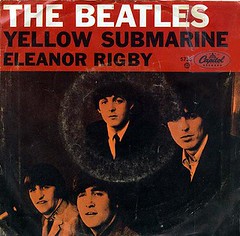
In the summer of 1966, after the England team beat West Germany to win the World Cup, the Beatles scored yet another No 1 with a double A-side single. On one side was the amiably meaningless “Yellow Submarine”, and on the other there was “Eleanor Rigby”, a sombre song with string backing about lonely people. It featured Eleanor Rigby, who sat by the window, and Father McKenzie, who may or may not have been the priest who officiated at her funeral, to which nobody came.

Mystery girl: ‘The Eleanor Rigby statue in Liverpooll
Sir Paul McCartney – who is assumed to be the song’s main author despite a late counter claim by John Lennon – originally encouraged people to believe that they would never find traces of the real Eleanor Rigby, because she was entirely fictitious. He said he had originally considered calling her Daisy Hawkins, although it is difficult to see how “Daisy” could have been made to fit the song’s meticulous scansion, in which two unstressed syllables follow each stressed syllable, except at the end of a line. But a fascinating document that is to be sold at auction this month suggests that he knew more than he was letting on. It is a page from an accounts log kept by the Corporation of Liverpool, which records the wages paid in 1911 to a scullery maid working for the City Hospital in Parkhill, who signed her name “E. Rigby”.
The document belongs to Annie Mawson, who runs a charity in Cumbria teaching music to children with learning difficulties and other disabilities. She received it from somebody working in McCartney’s office after she sent him a letter describing how she had taught a severely autistic boy to play “Yellow Submarine”. Now she hopes that the money raised from the sale will go towards paying for a permanent premises for her charity, the Sunbeam Music Trust.

“I wrote to Paul McCartney in 1990 to tell him how I was working at a special school in Cumbria,” she said yesterday. “One of the boys was autistic – but one of his obsessions was the Beatles. I built up a very trusting relationship with him and taught him to play ‘Yellow Submarine’ on the piano, which got him his Duke of Edinburgh Silver Award.
“It was very moving to see how he came out of his very locked up and insular world. I wanted Paul McCartney to know this. I also wanted to set up a centre of my own. I asked him for half a million pounds, but by the time I’d finished my 11 pages I said, ‘Actually Paul, I don’t want any money, I want you to know what joy you brought’.
“Months later, I got a reply with a logo that meant it could only have come from Paul McCartney’s office. Inside there was this document dated 1911. Then I saw the name Rigby and I realised why I’d been sent it. I feel that when you’re holding it you’re holding a bit of history.”
When McCartney was interviewed after the release of “Eleanor Rigby” in 1966, he said: “I was sitting at the piano when I thought of it. The first few bars just came to me, and I got this name in my head – Daisy Hawkins picks up the rice in the church. I don’t know why. I couldn’t think of much more so I put it away for a day.”
He claimed that he took the name “Eleanor” from Eleanor Bron, who starred with the Beatles in the film Help!, and “Rigby” from the Bristol wine merchants, Rigby & Evens. But in the 1980s, a grave was discovered in St Peter’s Church, Woolton, Liverpool, where McCartney and Lennon went sunbathing as teenagers, bearing the name Eleanor Rigby. She died in October 1939, aged 44, but unlike the lonely people in McCartney’s song, she was married. Another gravestone had the word “McKenzie” sprawled on it. Paul McCartney has denied that that is where he got the names, though he has acknowledged that they may have registered subconsciously.
The auction is being held at the Idea Generation galley in east London, on 27 November. The organisers hope it will fetch £500,000.
Eleanor Rigby signature auctioned

The document dates back to 1911 from Liverpool City Hospital
|
A document with the signature of Eleanor Rigby, who inspired the Beatles’ hit of the same name, is to be auctioned to raise money for charity.
The paper, dated 30 November 1911, shows the pay received by scullery maid E Rigby from Liverpool’s City Hospital.
It surfaced in 1990 when Sir Paul McCartney sent it to Annie Mawson of Cumbrian-based Sunbeams Music Trust, when she asked for a £500,000 donation.
It will be auctioned at London’s Idea Generation Gallery on 27 November.
The signature is expected to fetch £500,000.
Two guitars – one owned by Sir Cliff Richard and one from Sex Pistols’ Glen Matlock – will also be auctioned at the same time.
Miss Mawson, founder and chief executive of the Graystoke-based charity which helps children with special needs, said she believed the document was the inspiration behind the song Eleanor Rigby.
Very little is known about the hit, except that a grave to Eleanor Rigby was found in the churchyard of St Peters Church, Woolton, in the 1980s.
 |
 It was spine-shivering really  Anne Mawson, Sunbeam Music Trust
|
“I wrote a letter to Paul McCartney in 1989 on a pink paper asking for £500,000 to help provide music therapy to help children with disabilities,” Miss Mawson said.
“I just wanted him to know how much joy his music had brought.”
But nine months later the document arrived with the former Beatle’s world tour stamp on.
Miss Mawson said: “I opened it and inside was this beautiful, ancient document.
“It was spine-shivering really. Partly because he had responded in such a personal way.”
Miss Mawson had kept the document ever since.
The Sunbeam Music Trust was set up in 1992 to provide music therapy for children with special needs and disabilities, adults with Alzheimer’s and people with dementia.
The funds generated from the auction will go toward the charity’s new centre expected to be build near Penrith, Cumbria.
Source:Â http://news.bbc.co.uk/2/hi/uk_news/england/merseyside/7723003.stm
First Published Wednesday, 12 November 2008

Why don’t you understand?
Â
A new report on educating autistic children finds schools unable to cope and parents frustrated
Â
Teachers’ tolerance levels were never very high where John Davis was concerned. The boy, who has autism and dyspraxia, was noisier than many other children with his condition and would become frustrated easily, especially in a confined space.
Â
“John was perceived as being badly behaved and I would receive phone calls from the school telling me what he had done now, rather than asking me for advice on how to deal with it,” says his mother.
Â
“He had a statement of special needs from the age of four and was assigned a learning support assistant when he went to primary school, but she was more like a babysitter who was there to control him and take him out of lessons if he got disruptive.”
Â
The Davis’s story is fairly typical of the experiences of thousands of families with autistic children.
Â
Struggle to teach
Â
A report from the University of Birmingham’s Autism Centre for Education and Research, published today, shows that too many teachers and support staff are unfamiliar with the needs of autistic children and struggle to teach them effectively.
Â
“Teachers expected him to behave like everyone else, which was impossible,” says John’s mother. “Even though his primary school had a resource base for children on the autistic spectrum there was a fundamental lack of understanding of the condition. It wasn’t the fault of the staff. They just didn’t have the training.”
Â
The Birmingham study is thought to be the first to examine jointly the experiences of families and schools in dealing with the condition.
Â
Autism, which affects about one in 100 children, is thought to be triggered by a combination of genetics and environmental factors.
Â
Autistic people are described as being “locked in their own world” and struggle to communicate with others. They usually have heightened or lowered acuity of the senses and can display repetitive behaviour. Those affected often have other learning difficulties, such as dyspraxia, or may exhibit compulsive behaviour.
Â
The study finds that while the academic provision for children with autism has “improved tremendously” in recent years, much remains to be done.
Â
Practitioners trained in autism education say that one of the biggest challenges is a lack of knowledge and understanding among schoolteachers.
Â
John’s mother agrees. Strategies that might have helped John to make academic progress, such as a sloping writing board to help address his motor difficulties, were ignored by the school.
Â
“Often it is the simple things that need to be put in place to make a difference,” she says.
Â
The report finds that, despite the government’s policy of inclusion of pupils with special needs, mainstream schools find it difficult to integrate pupils with autism. Pupils had often been sent there against the wishes of parents, who wanted more specialised provision.
Â
One parent told researchers: “For a child to be successful in mainstream school, the school must want to make the most of every opportunity for the child and include the parents.”
Â
But instead of recognising the atypical development of children and young people on the autistic spectrum, teachers tend to view them through a “typical lens”, comparing their behaviour with children who do not have the condition. Some, like John’s teachers, believe they can force autistic children to behave as other pupils do, or that it is a condition that they will grow out of.
Â
There is also general confusion about autism. Teachers do not realise, for example, that the challenging behaviour can be accompanied by high intelligence.
Â
One father describes in the report how his seven-year-old son, who has Asperger’s syndrome, another condition on the autistic spectrum, has been deemed to be “too bright” for support, and yet “he can’t work with other children and he struggles to understand some instructions”.
Â
The report says that autistic pupils make the most progress when teachers provided an individualised programme that addresses specific social, personal and learning difficulties.
Â
A perceived, or otherwise, lack of support from school often leads to difficult relationships between the child’s home and teachers. The study finds that parents are often left to fight alone for the right education for their child and to deal with the effects of autism, leaving them “emotionally and physically exhausted from the constant demands and the harrowing situations they experience”.
Â
John’s mother describes how her own struggle to get her son the education he needed was met with bureaucracy, endless form-filling and meetings with panels of experts. “It can be very frightening, and you are made to feel vulnerable and like a bad parent. It is so daunting,” she says.
Â
Dr Glenys Jones, who led the team of researchers, does say there is cause for optimism. “There are some examples of good practice in schools, but this needs to be better disseminated,” she says. “There is no one-size-fits-all strategy because each autistic child is different. Not every child will need a specialist school or unit.”
Â
From next March training materials will be available under the government’s Inclusion Development Programme, aimed at those working with children on the autistic spectrum.
Â
The study concludes that those working with autistic children need specific knowledge of their individual needs and to provide the appropriate support, and that there should be “effective engagement” with their families.
Â
Good progress
Â
John’s mother says her son is now in a new primary school with staff who can support his needs. “He is happy and making good progress, but it has been a struggle to get him there,” his mother says.
Â
Bob Lowndes, chairman of the Autism Education Trust, which commissioned the study, says: “There is a growing commitment from education professionals to respond to the needs of children with autism, and provision now is much better than it used to be. Teachers continue to find it difficult to access the appropriate training to enable them to frame their knowledge of individual children with a real understanding and knowledge of the condition, and this needs to be addressed.”
Â
Lowndes hopes the findings will shape future provision. “The report should have real value, not just for teachers and other professionals working in schools, but also policy-makers who have responsibility for framing services in their area,” he says.
[This article was amended on 28 June 2011. John Davis, a pseudonym, was substituted for the name of the child featuring in the report at the request of the family.]
Â
Â
1. Kim left…
Thursday, 13 November 2008 12:23 am
 I used to be a teacher for children with Autism in a private school setting. Although we used many tools to assist students with Autism, the emphasis was still on making children behave “normally” enough to be able to attend a mainstream educational facility. If we were unable to do so, both the teacher and the student were branded as “failures,” and were “encouraged” to “leave” the school setting for a “more appropriate environment.”
Â
This is why my heart is gladdened by your blog. I’m not a “regular” reader, but I do drop by when I see something in the “community” pages that twigs my interest. Having kept up with you for the last few months, I’d like to thank you for all of the research that you are generous enough to share. Although it reminds me that there is still much work to do to help people understand about the nature of Autism, and the discrimination that people who are on the Autism spectrum face every day, it heartens me that there is someone out there like you – someone who recognises that people with Autism are just like everyone else … unique in their own right, and as such, are worthy of respect. It still really gets me that “normal” people have such a sense of entitlement to this respect for their differences, yet they will deny it to everyone else that falls outside of this sphere.
Â
Anyway, enough of my rambling … I just wanted to tell you that you are doing a marvellous job to raise the consciousness of people in the community about Autism.
Â
2. Julie left…
Thursday, 13 November 2008 10:48 pm
Thanks for taking the time to stop by Kim, and for the kind words. While there are some wonderful teachers, advocates and organizations doing their best to promote a positive attitude toward difference out there and who share the message ‘never underestimate the potential of the individual child’, there is undoubtedly alot of room for improvement in both attitude and understanding from a host of others. Your thoughts and attitude make a difference – thankyou. It was lovely to hear from you.
First Published Saturday, 15 November 2008

SAN ANTONIO – When a child is sick, most parents think relief is as close as the doctor’s office. But, many parents here tell us their children have been turned away by some medical professionals. News 4’s Leslie Bohl Jones investigates why a certain diagnosis may be the reason doctors are turning these young patients away.
The newest numbers show one in every 150 children has this condition. And because of that diagnosis, necessary medical care can be very difficult to find.
Little Kay wants to play like a typical two and a half year old, but her brain works differently than most children.
She has autism. Autism is a neurological condition where she processes information differently than others.
An occupational therapist and a speech therapist help little Kay maximize her words and actions. In addition to autism, she faces another common childhood problem. One that keeps her up most hours of the day and night!
“There are other times for anywhere from an hour to two hours she just goes (gasp), and it’s extremely scary,” says Kay’s mom, Rebecca Ferrall. “She is either not breathing or making funny noises or snoring, so she only sleeps a few hours a night.”
Kay’s tonsils need to come out. Breathing and snoring make sleeping a challenge for her and her family.
Desperately looking to help her child rest, Rebecca found a reputable surgeon. But she says she was stunned when the doctor flat out refused to perform the surgery. The reason? Kay’s autism.
“I was in shock,” says Rebecca. “First of all, that he had made a comment as a doctor that ‘those autistics’ don’t drink well after surgery. My 7-year-old had the surgery a year before so I know it’s all children who don’t drink well.”
Rebecca claims a second doctor also turned Kay away, because of her autism.
“I was very angry,” adds Rebecca. “I just cried because it was something she needed so badly and they weren’t going to do it. Just because of a label.”
Rebecca is not alone.
Maritza Craig has been there, too. She has experienced the same bias against her autistic son, Emilio.
“The doctors really don’t want to deal with these special needs kids because the behavior,” says Maritza. “So the easy way is to just deny [them].”
Psychologist Josue Gonzalez works with families impacted by autism. “As parents we expect the fact that whatever our child needs, we will be able to find and the reality is very different,” he says.
When asked if he is surprised to hear that doctors have turned away autistic children as patients, Dr. Gonzalez says, “No, I am not surprised. If anything, I think it identifies a much larger issue, which is that how it is that professionals should learn how to work with special needs children.”
It’s such a problem that Any Baby Can, an advocacy group for special needs children, had to put together a list of doctors and other professionals who will treat children with special needs.
“The issue is working toward developing programs identifying individuals who have such expertise and learning how to maximize those resources. But it’s not sufficient. We need more,” says Dr. Gonzalez.
After months of trying, Rebecca has found a surgeon who will remove Kay’s tonsils. But first, she must undergo some testing and it may be months before Kay and her family get the rest they need.
Rebecca hopes raising awareness will help parents of all children. “You are your child’s best advocate and never give up.”
News 4 did check with the Texas Medical Board which states a physician can refuse to treat any patient he or she chooses, except in the case of emergencies. That is in accordance with the American Medical Association.
To see the list produced by Any Baby Can offering resources to parents of autistic children, click here. Advocates hope that list will only grow as awareness is raised.
You can also check out Respite Care’s website, a school for special needs children that is located north of downtown in the Monte Vista neighborhood.
VIDEO/SOURCE:Â http://www.woai.com/content/troubleshooters/story.aspx?content_id=53565605-c58a-4d62-995a-5b1281b7ed2b&rss=322
First Published Saturday, 15 November 2008

The World Federation for Mental Health (WFMH) has published a comprehensive 40 page toolkit “Understanding generalized anxiety disorder” to help people understand this debilitating disorder.
The publication provides up-to date information about generalized anxiety disorder (GAD) in both adults and children, its current treatments, and the effects of stigma on those living with the disorder. Through the information presented, the toolkit aims to educate and inform those with GAD, their physicians, families and friends, and the general public about a condition that affects the lives of millions of people, and results in marked disability and significantly impaired quality of life. In addition to the information about GAD, the toolkit also contains a list of national and local organization which can be contacted for further information and support.
“Although common, generalized anxiety disorder is one of the most misunderstood mental health conditions due to its close association with other disorders,” said Stuart Montgomery, Imperial College School of Medicine, London. “It is up to all of us to raise awareness and understanding so that those with the condition can receive appropriate treatment.“
A major focus is to raise awareness about this condition and consequently reduce the stigma associated with GAD, so that more people can seek and receive appropriate treatment. Currently it is thought that only around 50% of people with GAD seek treatment which may have masked the true incidence of the disorder. This may be partly due to the social stigma surrounding the condition, but also due to misdiagnoses such as normal stress and hypochondria.
GAD does not discriminate between ethnic or socioeconomic backgrounds, with millions of people across the world living with its devastating symptoms. It is a syndrome of ongoing excessive anxiety and worry about every day matters. Physical symptoms include: fatigue, restlessness, difficulty concentrating, headaches, muscle tension and aches, trembling, irritability, sleep disturbances, sweating and hot flushes. It is often accompanied by depression or other anxiety disorders – and it has a substantial negative impact on quality of life, productivity at work, and healthcare costs. The disorder is common with a lifetime prevalence of around 8%.6 Currently, the causes of GAD are unknown, but it is thought that the levels of different neurotransmitters in the brain may play a role.
The GAD toolkit is produced by the WFMH and supported by an unrestricted educational grant from the pharmaceutical company AstraZeneca. It can be download in PDF format from:
http://www.wfmh.org/PDF/GAD%20Body-Toc%20cx.pdf
First Published Monday, 17 November 2008
Fwd:Â Cross-posting and offline sharing is permitted and encouraged:

Autreat is a retreat-style conference run by Autism Network
International, for autistic people and our families, friends,
supporters, and interested professionals. We are accepting
presentation proposals for Autreat 2009, to be held Monday-Friday,
June 29-July 3, 2009, in Bradford, Pennsylvania (approximately 80
miles from the nearest major airport at Buffalo, New York).
FOR HELP PREPARING A PROPOSAL:
If you want to submit a proposal but you have trouble reading these
instructions and putting your proposal in the requested format,
contact cfp-help@autreat.com for help. Send only
plain text messages, with no attachments.
WHAT KINDS OF WORKSHOPS ARE WANTED AT AUTREAT?
Autreat is very different from typical autism conferences:
WHEN PREPARING A PROPOSAL FOR CONSIDERATION, BE AWARE THAT THE
*PRIMARY* AUDIENCE AT AUTREAT IS AUTISTIC PEOPLE.
Parents and professionals do attend, and most who attend find the
presentations to be of interest, but Autreat is basically autistic
space.
Be sure your information is being presented in a manner that is both
helpful to and respectful of autistic people.
We expect that you will be speaking *to* us, not speaking to
non-autistic people *about* us.
We are interested in presentations, by either autistic or non-autistic
people, about POSITIVE WAYS OF LIVING WITH AUTISM, about functioning
as autistic people in a neurotypical world, and about the disability
movement and its significance for autistic people.
We are interested in educational and informative presentations, not in
sales pitches for a presenter’s products or services. If you are
representing a commercial enterprise and would like a forum to sell
products or services at Autreat, please contact us for information
about attending Autreat as a vendor.
We are *not* interested in presentations about how to cure, prevent,
or overcome autism.
We do *not* appreciate having non-autistic people come into our space
to talk to each other about how difficult we are to deal with, or how
heroic they are for putting up with us.
If your presentation is geared toward the interests of parents or
professionals, it should focus on positive ways of appreciating and
supporting autistic people, not on reinforcing negative attitudes
about autism and autistic people.
AUTREAT AIMS TO BE WELCOMING AND RELEVANT TO THE BROADEST POSSIBLE
CROSS-SECTION OF THE AUTISTIC POPULATION.
Autreat is attended by autistic people who speak and by autistic
people who do not speak;
by autistic people who communicate fluently and by autistic people who
have limited communication;
by autistic people who live independently and by autistic people who
need intensive support with daily living;
by autistic people who have jobs and by autistic people who live on
disability benefits;
by autistic people who are able to present as “socially acceptable”
and by autistic people who require support to help them manage their
behavior:
by autistic people who have been labeled “high-functioning” and by
autistic people who have been labeled “low-functioning”—including some
autistic people who have had *both* labels, at different times or
under different circumstances.
While it is not expected that any one presentation will be of interest
to each and every autistic person, we do look for presentations that
will appeal to the widest possible audience.
We are *not* interested in presentations that reinforce what we
consider to be artificial distinctions between members of our
community who are labeled “low-” vs.”high-functioning.”
A NOTE ABOUT “PERSONAL EXPERIENCE” PRESENTATIONS:
Be aware that everyone at Autreat either knows what it’s like to be
autistic, or knows what it’s like to care about someone who is
autistic.
All of us have our own personal stories. Presentations about the
presenters’ personal stories are not going to generate much interest,
unless you’re able to use your story in a way that will help other
people to share and understand their own experiences in a new way.
Your proposal should describe what participants can expect to get out
of your presentation, not just what personal experiences you’re going
to talk about.
TO LEARN MORE ABOUT PRESENTATION TOPICS OF INTEREST
If you have never attended Autreat before, please review the ANI web
site (www.ani.ac) and the past Autreat brochures
(http://www.ani.ac/past-workshops.htm), and contact Jim Sinclair
(jisincla@syr.edu) if you have questions, to make sure you understand
what Autreat is about and whether your topic is relevant to ANI’s
philosophy.
WHAT IS EXPECTED OF PRESENTERS?
If you submit a proposal, we expect you to be available to attend
Autreat if we accept your proposal, and to give your presentation on
the day and time scheduled. We make every effort to accommodate
presenters’ preferences in setting the Autreat schedule, but it is not
always possible to give every presenter his or her preferred time
slot.
Presenters are expected to send advance copies of any handouts or
slides they plan to use, so that we can prepare alternate format
copies for print-impaired attendees.
Presenters are asked to submit an article on their topic for inclusion
in the program book. These also need to be submitted in a timely
manner, so we can prepare copies in alternate formats.
Presenters are expected to consent for their presentations to be
recorded, and for the recordings to be sold by Autism Network
International.
Presenters are invited to attend all of Autreat. If presenters opt not
to attend the entire event, they are expected to arrive on-site by
8:30 a.m. for afternoon presentations, and to arrive the night before
for morning presentations.
Please be prepared to meet these expectations if you decide to submit
a proposal.
WHAT’S IN IT FOR THE PRESENTERS?
Individual Autreat presenters receive free registration for Autreat,
including on-site meals and lodging in a shared (2-person) room. (A
private room may be available at the presenter’s own expense.) This
free registration is for the presenter *only*, not for a presenter’s
family members or support staff.
In the case of panel presentations consisting of three or more
presenters, we offer one complete four-day Autreat registration, plus
a single-day registration (including three meals and one overnight, if
desired) for each additional panelist. Therefore, a panel of X
presenters is entitled to a total of 4+(X-1) free days/overnights.
Panelists may divide these free days amongst their members as they
wish. Panel presenters are of course welcome to register and stay for
additional days, at their own expense.
ANI is a volunteer-run, member-supported grassroots organization with
minimal funding. We cannot reimburse for off-site expenses, nor can we
pay travel expenses or honoraria. If your proposal is accepted, we
will send you a formal letter of invitation if this would help you in
raising your own travel funds.
Presenters are entitled to receive one free copy of the recording of
their presentations.
PROPOSALS SHOULD INCLUDE:
* Your name and title (if any) exactly as you want them listed in
program materials should your proposal be accepted
* Contact information (address, phone, fax and/or email if you have them)
* Title of your proposed presentation
* Detailed description for consideration by the Planning Committee
* Brief (5 sentences or less) abstract exactly as you want it listed
in program materials should your proposal be accepted
* Indicate ONE theme that BEST relates to your proposed presentation:
[ ] Advocacy skills
[ ] Life skills/adaptive strategies
[ ] Helpful support services
[ ] Communication
[ ] Social/interpersonal issues
[ ] Personal/self-awareness/self-development issues
[ ] Autistic community and culture
[ ] Education
[ ] Employment
[ ] Family issues
[ ] Residential issues
[ ] Disability rights and politics
[ ] Autism research and theory
[ ] Other (describe):
* Indicate which group(s) you believe would find your proposed
presentation of interest. Check as many as apply. Briefly describe
what your presentation would offer to each group:
[ ] Autistic adults
[ ] Autistic teenagers
[ ] Family members of autistic people
[ ] Educators
[ ] Clinicians
[ ] Service providers
[ ] Other (specify):
* Brief (5 sentences or less) presenter bio exactly as you want it
listed in program materials should your proposal be accepted
* Any audiovisual equipment you would need for your presentation
If you have never presented at Autreat before, please also include an
introduction for the Planning Committee summarizing your relevant
experience, including any presentations or other education/advocacy
activities elsewhere, and the nature of your interest in autism and/or
in general disability issues.
PROPOSAL DEADLINE:
February 15, 2009
HOW TO SUBMIT A PROPOSAL
Proposals can be submitted via email to proposals@autreat.com, or via
postal mail to ANI at the address below, or submitted online at
www.ani.ac/aut09cfp.php.
WHAT IF I DON’T WANT TO PRESENT, BUT I HAVE AN IDEA FOR A PRESENTATION
I’D LIKE TO SEE?
If you want to make suggestions for Autreat presentations, or make
comments about previous presentations or presenters, please fill out
the questionnaire available at www.ani.ac/autplan2.php.
Autism Network International
P.O. Box 35448
Syracuse NY 13235
USA