


Published on Wednesday 22 June 2011 21:40
“A foolproof test for autism in adults and children is “a major step†closer,†The Daily Telegraph has reported. The newspaper says that the new brain scan “can detect the condition with almost 100 per cent accuracyâ€.
The news is based on research that compared brain scans of 30 male children and adults with high-functioning autism with 30 matched males with the same IQ but typical development. Scientists found that using magnetic resonance imaging (MRI) scans to examine enhanced details of brain cell fibre patterns allowed them to detect subtle structural differences in the brains of the two groups, specifically within two areas associated with language and social cognition. When they concentrated on six characteristic differences the scientists were able correctly to identify a person with autism 93.6% of the time and to identify individuals without autism correctly 89.6% of the time.
Although this research is a useful preliminary step in finding a biological measure that can distinguish between autistic individuals and typically-developing individuals, further research is needed to see whether these findings apply to a broader group of people with autism, such as those with more severe autism, women and younger children.
Where did the story come from?
The study was carried out by researchers from Harvard Medical School and was funded by The National Institutes of Health in the US. It was published in the peer-reviewed medical journal Autism Research.
The research was covered accurately by The Daily Telegraph, although further validation is required before this method could be used as a clinical test. The Daily Mail reported that a brain scan has been developed that could “diagnose autism in children in just ten minutesâ€, allowing the condition to be detected at a much younger stage so children could begin therapy and treatment before they start school. This research only conducted MRI scans on individuals over seven years of age, including fully grown adults. Therefore, it is not possible to say whether this technique would be able to detect autism in younger individuals as successfully as conventional methods.
Read in Full:
http://www.garstangcourier.co.uk/news/health/scans_find_autistic_brain_changes_1_2831008
Jun
22
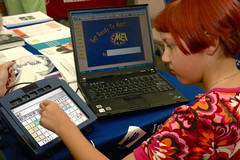
Assistive technology devices are simple or advanced devices that can help in improving the quality of life of those suffering from disabilities. In this article, we will look into the types of assistive technology for autism and the benefits of using assistive technology for autistic individuals.
The term ‘assistive technology’ refers to devices or products that are used for maintaining or improving the functional capabilities of people suffering from physical disabilities or developmental disorders. The development of a wide range of computer devices for the physically challenged has made the lives of people with disabilities much better. These devices have given them access to the vast information that is available on the web pages.
There are various types of disabilities that can affect children and adults, and the nature of the disability one may be suffering from needs to be considered while selecting an assistive technology device. Individuals diagnosed with any condition that is classified under the autism spectrum disorders, have impaired communication and often find it hard to relate to others and form relationships, which is why, augmentative communication devices can certainly help such individuals communicate in a better way. The main objective behind using such devices is to improve the communication skills of autistic children and help them become self-reliant. In this article, we would look at some of the common types of assistive technology for autism.
The Need for Assistive Technology for Autistic Children
Before I tell you more about the assistive technology devices for autistic children, let me give you a brief overview on autism. Autism is a developmental disorder that develops in early childhood. Classic autism, Asperger’s syndrome, atypical autism, Rett’s syndrome and childhood disintegrative disorder are all developmental disorders that are grouped under the autism spectrum disorders. Autism is characterized by impaired social interaction and repetitive behavior patterns. Such children are unable to relate to others, and understand their perspective. They often end up being friendless due to their inability to express themselves or reciprocate. Children affected by autism often face problems in acquiring language skills. Since autistic children often face difficulty while learning languages and are unable to react properly in social situations, there is a great need to find ways to help them learn. This is where assistive technology for autism comes into picture. There are various types of devices that can help such children learn to communicate better. Given below is some information on the wide range of assistive technology devices for autistic children.
Types of Assistive Technology for Autism
Visual representation systems have often proved helpful in helping such autistic children acquire language and social skills. Objects, photographs or drawings are often used so as to help the child identify objects or persons. Picture Exchange Communication System is one such simple augmentative communication tool that can help autistic children. These are a stack of picture cards that are bound together. These picture cards may contain pictures explaining the child’s daily routine or the activities the child needs to perform. Since autistic children may have trouble maintaining eye contact, through these visual cues, the child can get a basic idea about things that must be remembered. Similarly, the child can also use visual cues or picture cards to tell others what he/she wants to say. Once the child grows older, simple battery-operated devices such as voice output communication devices, tape recorders or projectors can be used for improving the child’s communication skills.
Read in Full:
http://www.buzzle.com/articles/assistive-technology-for-autism.html

By Beth Anspach, Contributing Writer 3:07 PM Tuesday, June 21, 2011
Cassie LeDuc graduated from Stebbins High School this year after spending her junior and senior year there. Prior to moving to Ohio, she lived two years in Italy and, like most military kids, has seen a lot of the world.
“My mom is a retired Air Force officer and worked as an operating room nurse,†LeDuc said. “I was born into a military family, and have visited just about every European country and have lived all over the United States.”
It’s also the life LeDuc wanted for herself as an adult. Which is why she decided to enroll in the AFJROTC program in high school her freshman year in Italy. And though she was diagnosed with Asperger’s Syndrome, a form of autism, at the age of 15, LeDuc excelled academically and continued to plan for a future in military service.
“My mom was transferred to Wright Patterson and I was pretty nervous about coming to America, but excited too because I would be graduating from high school in the States,†LeDuc said.
LeDuc’s Asperger’s never held her back. “The diagnosis helped me understand why I went from having a bunch of friends to having very few friends,†she said. Asperger’s is characterized by significant difficulties in social interaction and, according to LeDuc, most people with the syndrome have higher levels of intelligence. “I never had any problems in school,†LeDuc said. “I always had an ability to comprehend things much faster and most people, including my teachers, would never know anything was wrong with me.”
As LeDuc progressed through her two years at Stebbins in the ROTC program and flourished, her academic successes made her eligible for a full Navy ROTC scholarship. She graduated with a 3.81 grade point average and, as a result, was awarded the scholarship.
“I had decided to attend Norwich University in Vermont to study physics,†LeDuc, who had planned a career in the Navy, said. But within a few weeks she received notification that her scholarship was being revoked due to medical reasons since no branch of the military will take an Asperger’s patient.
“It was very disappointing,†LeDuc said. And though LeDuc suspected her Asperger’s might disqualify her, she had been working to get a waiver earlier in the school year and she does have a back-up plan.
“I’m attending Wright State University in the fall to study nursing,†LeDuc said. “I know the military needs nurses, and if have my degree in nursing my hope is that I will get my waiver.”
Source:

That’s the question Stephen Jerger, 11, asked 15-year-old Micah Wilger during an interview at KGNU radio studios last week as part of a three-week summer program, designed for adolescents with Asperger’s Syndrome, a condition which often includes high intelligence but challenges in communicating effectively.
The Perspectives program, a cooperative effort between the Temple Grandin School, formerly the Bridge School, and the University of Colorado’s Speech, Language and Hearing Sciences department, uses radio interviews as a way to teach better communication skills.
“Some students on the autism spectrum have challenges considering what other people are thinking,” says Amy Thrasher, a clinical assistant professor at CU. She supervises several graduate students who also were involved in the three-week program.
Learning to interview is a way to help students to understand another person’s perspective, Thrasher says.
Take that question on creative writing. Earlier in the program, students had learned how to use the microphones and editing software at KGNU. Additionally, News Producer Len Houle offered instruction in how to interview. He emphasized asking open-ended questions, so as to elicit a long, interesting answer rather than a simple “yes” or “no.”
Students observed Houle interview one of the graduate students and then broke into groups to work on their own interview questions. The students picked their interview subjects, with Stephen opting to question Micah about novels he has written.
As Micah explains: “I write a short novel once a year, some fantasy, some realistic fiction. I try to do something different each year.”
Micah’s mother, Jennifer Wilger, is the Temple Grandin School’s curriculum director and co-founder. The school, named after the Colorado State University animal scientist who is on the autism spectrum herself, is designed to focus on students’ strengths, while giving them support in social interactions and other challenges. The Perspectives program was funded in part by an arm of the Scottish Rite Foundation.
Read in Full(Includes Video):

Reviewed by John M. Grohol, Psy.D. on June 15, 2011
A new research abstract suggest that a treatment regimen of cognitive-behavioral therapy can reduce suicidal thoughts among individuals with insomnia.
Researchers discovered about 21 percent of participants with insomnia (65 of 303) reported having suicidal thoughts or wishes during the past two weeks.
Group cognitive-behavioral therapy for insomnia produced a statistically significant post-treatment reduction in suicidal ideation. Treatment sessions were conducted weekly until the final two sessions, which were conducted bi-weekly.
According to the authors, a growing body of evidence suggests that self-reported insomnia and poor sleep quality constitute modifiable risk factors for suicide.
Sleep complaints are recognized as significant suicide warning signs by the federal Substance Abuse and Mental Health Service Administration. However, no previous studies had evaluated the impact of a sleep intervention on suicidal ideation.
“This is the first investigation to show that a sleep-targeted intervention has a therapeutic impact on suicide risk specifically,†said lead author Rebecca Bernert, Ph.D. “This suggests that a treatment focus on sleep disturbances may have important implications for the prevention of suicidal behaviors.”
Read in Full:

Hope turns up in the strangest places sometimes.
And sometimes you really need it to.
At the end of your tether, strung out, sometimes it’s hard to know what you’re supposed to do to make it through even just another day.
Today, I spied a mini-message of hope, stuck onto the bottom of a traffic sign in my neighbourhood, underneath a scrawled texta heart (that’s it in the photo). The whole thing was only a few square centimetres, easy to overlook. And I wasn’t expecting to find it:
“When you’re at the end of your rope,
tie a knot and hang on”
(Surely, this is ‘vandalism’ at it’s best…)
So what might help you to tie that virtual knot?
What helps you hold on when things are tough?
What gives you the strength to hang in there one more day?
Maybe it’s remembering the ones you love – people or pets – living or not – and connecting with them in whatever way you can.
Or getting lost in the flow of something you love to do.
Or maybe it’s as simple as seeing the slant of the morning sun through the trees.
For hope comes in all shapes and sizes. Sometimes it makes grand gestures and writes itself across the sky in letters a thousand feet high. Other times, it’s still and small.
But when it seems hard to believe that it will ever visit you again, or if you’re starting to feel overwhelmed, those are the times to build in some safety for yourself – something to help you rise back up from despair.
And if you’re not feeling strong enough to do that alone right now, you can always reach out to others who can help.
Maybe a friend.
Or a mentor.
Or a counsellor.
Or a telephone helpline (like Lifeline in Australia, Contact in the US, Telecare in Canada or TELL in Japan)
Read in Full:

Reviewed by John M. Grohol, Psy.D. on June 15, 2011
A person’s happiness appears to depend more upon the freedom to make choices rather than having money, at least according to a review of data from 63 countries.
In the study, researchers at the Victoria University of Wellington in New Zealand wanted to know one thing: What is more important for well-being, providing people with money or providing them with choices and autonomy?
The investigation helps to fill in gaps in determining the values or attributes that contribute to happiness and life satisfaction among a worldwide sample.
“Our findings provide new insights into well-being at the societal level,†they wrote in the Journal of Personality and Social Psychology. “Providing individuals with more autonomy appears to be important for reducing negative psychological symptoms, relatively independent of wealth.”
Psychologists Drs. Ronald Fischer and Diana Boer looked at studies involving three different psychological tests — the General Health Questionnaire, which measures four symptoms of distress (somatic symptoms, anxiety and insomnia, social dysfunction and severe depression); the Spielberger State-Trait Anxiety Inventory, which tests how respondents feel at a particular moment; and the Maslach Burnout Inventory, which tests for emotional exhaustion, depersonalization and lack of personal accomplishment.
Read in Full:

Reviewed by John M. Grohol, Psy.D. on June 15, 2011
A new psychological study warns that economic disparities seems to make people unhappy.
Over the last 40 years, “we’ve seen that people seem to be happier when there is more equality,†says University of Virginia psychologist Dr. Shigehiro Oishi, who lead the study.
“Income disparity has grown a lot in the U.S., especially since the 1980s. With that, we’ve seen a marked drop in life satisfaction and happiness.”
The findings hold true for about 60 percent of Americans—people in the lower and moderate income brackets.
The psychologists studied survey data for more than 48,000 respondents over 37 years. Researchers examined the relationships among the answers to one question rating happiness on a three-point scale and two indicating the respondents’ sense of how fair and trustworthy their fellow Americans were.
These answers were analyzed alongside the individual’s income and a globally recognized instrument measuring national income equality in each survey year.
Investigators discovered the gap between people’s own fortunes and those of people who are better off is correlated with feelings that other people are less fair and less trustworthy, and this results in a diminished sense of well-being in general.
Read in Full:
http://psychcentral.com/news/2011/06/14/growing-income-inequality-tied-to-unhappiness/26909.html

Article Date: 15 Jun 2011 – 1:00 PDT
The Royal College of Psychiatrists has launched a new online resource offering information and guidance about returning to work after a period of mental ill-health.
The Work and Mental Health website is divided into four main parts, and is aimed at workers, carers, employers and clinicians. Each section signposts relevant information and provides useful links to resources from other organisations.
The website explains how work can be good for people’s mental health and well-being – and can play a positive part in people’s recovery. It shows how employers may provide effective support at work for people with a history of mental ill-health, and how clinicians can support people returning to work.
The website has been developed by a multiprofessional working group, including psychiatrists, occupational health clinicians, GPs, nurses, psychologists, HR professionals, and mental health service users.
Read in Full:
http://www.medicalnewstoday.com/releases/228543.php

Today, the High Court ruled that the London Borough of Hillingdon acted unlawfully when they served Steven Neary, a young man with autism, with a Deprivation of Liberty order. The NAS welcomes the ruling and believes it should serve to demonstrate that local authorities should apply deprivation of liberty safeguards appropriately and with care.
Carol Povey, NAS Director of the Centre for Autism, says,
In this case, we have seen the wrongful application of an important and complex area of the law. It led to Steven Neary being kept away from his home for nearly a year and his father, his main carer, being excluded from the decision making process. The purpose of the Deprivation of Liberty Safeguards is to prevent people who lack mental capacity from being deprived of their liberty unless it is in their best interests and necessary to protect them from harm. It is important to remember that, with the right support for families, people with autism, like Stephen, can live at home and in their communities.
She continues,
In order that these safeguards are properly imposed on individuals with autism in the future, support staff require appropriate autism-specific training in order to support people in the least restrictive way. The Deprivation of Liberty Safeguards should be imposed only in instances of absolute necessity.
Recent research by the Mental Health Alliance, of which the NAS is a member, found that this area of law was misunderstood by many local authorities. This case demonstrates that local authorities must ensure proper awareness of the law on deprivation of liberty.
Source:
http://www.autism.org.uk/news-and-events/news-from-the-nas/steven-neary-high-court-ruling.aspx

Related Articles
“Update on Steven Neary Case: Dad and Autistic Son Reunited After High Court Judgement”: