

First Published Tuesday, 10 February 2009

Each year, many people seek emergency treatment for unexplained chest pains. A thesis from the Sahlgrenska Academy, University of Gothenburg, Sweden, indicates several common factors among those affected, including stress at work, anxiety, depression and a sedentary lifestyle.
Chest pain is a common reason for patients to seek emergency treatment. A considerable number of patients are diagnosed with unexplained chest pain, which means that the pain cannot be linked to biomedical factors such as heart disease, or some other illness. The patient group is significant in size but so far researchers have been unable to identify specific causes for unexplained chest pain.
“Many suffer from recurring bouts of pain over several years, while the health care services are unable to find out what’s causing it,” says Registered nurse Annika Janson Fagring, the author of the thesis.
In her thesis, Annika Janson Fagring describes and analyses symptoms among patients with unexplained chest pain. The results show that most of them are middle-aged, and that over a third of those affected were born outside Sweden. The chest pain had a negative impact on the patients’ daily life in the form of tiredness, anxiety and fear of death.
“The main difference between women and men with unexplained chest pain is that men were more likely to perceive their lives and jobs as being stressful, while women tended more to suffer from symptoms of depressions and anxiety,” says Annika Janson Fagring.
The patients, both men and women, experienced more symptoms of depression and anxiety, and work-related stress when compared with a reference group of people who were not suffering from heart disease. The male patients were more physically active in their spare time than the female patients, but compared with the reference group, both the men and the women with unexplained chest pain led a more sedentary lifestyle.
The thesis also looks at the development of symptoms and the prognosis for patients with unexplained chest pain over a period of time, compared with patients suffering from angina and patients who had suffered a heart attack. A register study revealed that from 1987 up until 2000, the number of patients with diagnosed unexplained chest pain increased, and then leveled out. The number of patients with angina increased up until 1994 and has since fallen, while the number of patients who have suffered heart attacks has fallen throughout the whole period examined.
There were fewer deaths among patients with unexplained chest pain a year after they became ill, compared with patients that became ill with angina or suffered heart attacks. Deaths among men a year after falling ill with unexplained chest pain were a third higher compared with men in the rest of the population, while women did not display any increased risk of death.
Annika Janson Fagring says that the thesis shows that it is important to improve knowledge and understanding of the symptoms experienced by patients with unexplained chest pain, in order to be able to offer more individualized care.

Janson Fagring A. Unexplained chest pain in men and women – symptom perception and outcome. Thesis presentation, Sahlgrenska Academy, University of Gothenburg 2009. [Abstract]

Johns Hopkins Health Alert
CPR to the Rescue
Posted in Heart Health on January 30, 2009If you have a friend or loved one with coronary heart disease, you’ll want to know what to do in the event of sudden, cardiac arrest. A study reported in the journal The Lancet compares the benefits of mouth-to-mouth ventilation and chest compressions versus chest compressions alone and their findings may surprise you.
A heart attack typically occurs when a blood clot in a coronary artery completely blocks blood flow to a segment of the heart. When this blockage takes place, portions of the heart muscle are deprived of oxygen and become permanently damaged. Damage to the heart muscle can impair the ability of the heart to pump blood efficiently, which can lead to heart failure. The impaired blood flow can also damage the electrical system of the heart and lead to arrhythmias.
A study reported in The Lancet (Volume 369, page 920) found that victims of cardiac arrest (heart attack) stand a better chance of surviving if a bystander performs only chest compressions and forgoes mouth-to-mouth ventilation.
Japanese researchers found that of 4,068 adults who had a cardiac arrest outside the hospital, those who received chest compressions alone were twice as likely to survive with good brain function 30 days later as those who received standard CPR (22% vs. 10%).
The findings go against the long-held principles of CPR, which combine chest compressions and “rescue breaths.” But they also support what a number of experts have said for years: Mouth-to-mouth resuscitation does little for cardiac arrest victims and may actually dim their already low odds of survival.
What’s more, mouth-to-mouth ventilation is often a barrier to bystanders initiating CPR. Chest compressions are vital to keep blood flowing to and from the heart until medical help arrives; stopping to deliver rescue breaths may impede this blood flow.
Bottom line: Though these study results have spurred calls for revamped CPR recommendations, guidelines from the American Heart Association (AHA) still advise rescue breaths (two breaths after every 30 chest compressions) for all cardiac arrest victims. We advise that you follow the AHA recommendations.
Campaign
British Heart Foundation – February is National Heart Month:
First Published Tuesday, 10 February 2009

Allowing You Faster Access To Various Countries’ Autism-Specific Web Links & Resources Etc …
COLORADOÂ Â December 9th, 2010 – Includes photos, resources & links from the State of Colorado(Includes Christmas Resources & Articles):
http://aspie-editorial.blog-city.com/news_9th_december_2010.htm
NEW MEXICOÂ Â November 25th, 2010 – Includes photos, resources & links from the State of New Mexico(Includes Thanksgiving Resources & Articles):
http://aspie-editorial.blog-city.com/news_25th_november_2010.htm
ALASKAÂ Â October 21st, 2010 – Includes photos, resources & links from the State of Alaska:
http://aspie-editorial.blog-city.com/news_21st_october_2010.htm
ARIZONAÂ Â October 7th, 2010 – Includes photos, resources & links from the State of Arizona:
http://aspie-editorial.blog-city.com/news_7th_october_2010.htm
UTAHÂ Â September 23rd, 2010 – Includes photos, resources & links from the State of Utah:
http://aspie-editorial.blog-city.com/news_23rd_september_2010.htm
NEVADAÂ Â September 9th, 2010 – Includes photos, resources & links from the State of Nevada:
http://aspie-editorial.blog-city.com/news_9th_september_2010.htm
IDAHO Â August 26th, 2010 – Includes photos, resources & links from the State of Idaho:
http://aspie-editorial.blog-city.com/news_26th_august_2010.htm
WASHINGTON Â August 12th, 2010 – Includes photos, resources & links from the State of Washington:
http://aspie-editorial.blog-city.com/news_12th_august_2010.htm
OREGONÂ Â July 29th, 2010 – Includes photos, resources & links from Oregon:
http://aspie-editorial.blog-city.com/news_29th_july_2010.htm
CALIFORNIAÂ Â July 15th, 2010 – Includes photos, resources & links from California:
http://aspie-editorial.blog-city.com/news_15th_july_2010.htm
HAWAIIÂ Â July 1st, 2010 – Includes photos, resources & links from Hawaii:
http://aspie-editorial.blog-city.com/news_1st_july_2010.htm
BOSNIA & HERZEGOVINAÂ Â June 3rd, 2010 – Includes photos, resources & links from Bosnia & Herzegovina:
http://aspie-editorial.blog-city.com/news_3rd_june_2010_1.htm
POLANDÂ Â May 20th, 2010 – Includes photos, resources & links from Poland:
http://aspie-editorial.blog-city.com/news_20th_may_2010.htm
CROATIAÂ Â May 6th, 2010 – Includes photos, resources & links from Croatia:
http://aspie-editorial.blog-city.com/news_6th_may_2010.htm
HUNGARYÂ Â April 22nd, 2010 – Includes photos, resources & links from Hungary:
http://aspie-editorial.blog-city.com/news_22nd_april_2010.htm
ROMANIA Â April 8th, 2010 – Includes photos, resources & links from Romania:
http://aspie-editorial.blog-city.com/news_8th_april_2010.htm
SLOVAK REPUBLICÂ Â March 25th, 2010 – Includes photos, resources & links from the Slovak Republic(Additionally includes Easter Links):
http://aspie-editorial.blog-city.com/news_25th_march_2010.htm
CZECH REPUBLIC Â March 4th, 2010 – Includes photos, resources & links from the Czech Republic:
http://aspie-editorial.blog-city.com/news_4th_march_2010.htm
NORWAYÂ Â February 18th, 2010 – Includes photos, resources & links from Norway:
http://aspie-editorial.blog-city.com/news_18th_february_2010.htm
DENMARKÂ Â February 4th, 2010 – Includes photos, resources & links from Denmark:
http://aspie-editorial.blog-city.com/news_4th_february_2010.htm
NETHERLANDS Â January 21st, 2010 – Includes photos, resources & links from The Netherlands:
http://aspie-editorial.blog-city.com/news_21st_january_2010.htm
GERMANYÂ Â January 7th, 2010 – Includes photos, resources & links from Germany:
http://aspie-editorial.blog-city.com/news_7th_january_2010.htm
AUSTRIAÂ Â December 22nd, 2009 – Includes photos, resources & links from Austria:
http://aspie-editorial.blog-city.com/news_22nd_december_2009.htm
SERBIAÂ Â December 10th, 2009 – Includes photos, resources & links from Serbia:
http://aspie-editorial.blog-city.com/news_10th_december_2009.htm
BULGARIA Â November 26th, 2009(Thanksgiving Edition) – Includes photos, resources & links from Bulgaria:
http://aspie-editorial.blog-city.com/news_26th_november_2009.htm
MACEDONIA Â November 12th, 2009 – Includes photos, resources & links from Macedonia:
http://aspie-editorial.blog-city.com/news_12th_november_2009.htm
ALBANIAÂ Â October 29th, 2009 – Includes photos, resources & links from Albania:
http://aspie-editorial.blog-city.com/news_29th_october_2009.htm
UKRAINEÂ Â October 15th, 2009 – Includes photos, resources & links from Ukraine:
http://aspie-editorial.blog-city.com/news_15th_october_2009.htm
TURKEYÂ Â October 1st, 2009 – Includes photos, resources & links from Turkey:
http://aspie-editorial.blog-city.com/news_1st_october_2009.htm
SAUDI ARABIAÂ Â September 17th, 2009 – Includes photos, resources & links from Saudi Arabia:
http://aspie-editorial.blog-city.com/news_17th_september_2009.htm
EGYPTÂ Â September 3rd, 2009 – Includes photos, resources & links from Egypt:
http://aspie-editorial.blog-city.com/news_3rd_september_2009.htm
LIBYAÂ Â August 20th, 2009 – Includes photos, resources & links from Libya.
Additionally, you’ll find Author Will Hadcroft’s latest interview with RBS World Magazine along with news of Will’s latest installment in the outstanding Anne Droyd series(See Books):
http://aspie-editorial.blog-city.com/news_20th_august_2009.htm
TUNISIAÂ Â August 6th, 2009 – Includes photos, resources & links from Tunisia:
http://aspie-editorial.blog-city.com/news_6th_august_2009.htm
ALGERIAÂ Â July 23rd, 2009 – Includes photos, resources & links from Algeria:
http://aspie-editorial.blog-city.com/news_23rd_july_2009.htm
SOUTH AFRICAÂ Â July 9th, 2009 – Includes photos, resources & links from South Africa:
http://aspie-editorial.blog-city.com/news_9th_july_2009.htm
MOROCCO Â June 25th, 2009 – Includes photos, resources & links from Morocco:
http://aspie-editorial.blog-city.com/news_25th_june_2009_1.htm
PORTUGALÂ Â June 4th, 2009 – Includes photos, resources & links from Portugal:
http://aspie-editorial.blog-city.com/news_4th_june_2009.htm
SPAIN Â May 21st, 2009 – Includes photos, resources & links from Spain:
http://aspie-editorial.blog-city.com/news_21st_may_2009.htm
GREECEÂ Â May 7th, 2009 – Includes photos, resources & links from Greece:
http://aspie-editorial.blog-city.com/news_7th_may_2009.htm
ITALY  April 23rd, 2009 – Includes photos, resources & links from Italy. Special thanks to Carol Surber for sharing her highly acclaimed It’s Ok Eli( See Books Section).:
http://aspie-editorial.blog-city.com/news_23rd_april_2009.htm
FRANCE  April 9th, 2009 – Includes photos, resources & links from France. Additionally includes Easter links (eg. art, craft, recipes etc):
http://aspie-editorial.blog-city.com/news_9th_april_2009.htm
UNITED KINGDOMÂ Â March 26th, 2009 – Includes photos, resources & links from the United Kingdom:
http://aspie-editorial.blog-city.com/news_26th_march_2009.htm
IRELANDÂ March 12th, 2009 – Includes photos, resources & links from The Emerald Isle:
http://aspie-editorial.blog-city.com/news_12th_march_2009.htm
PHILIPPINESÂ Â February 26th, 2009 – Includes photos, resources & links from The Philippines:
http://aspie-editorial.blog-city.com/news_26th_february_2009.htm
SINGAPOREÂ Â February 12th, 2009 – Includes photos, resources & links from Singapore:
http://aspie-editorial.blog-city.com/news_12th_february_2009.htm
NEW ZEALANDÂ January 29th, 2009 – Includes New Zealand photos, resources & links:
http://aspie-editorial.blog-city.com/news_29th_january_2009.htm
AUSTRALIAÂ January 15th, 2009 – Includes Australian photos, resources & links:
http://aspie-editorial.blog-city.com/news_15th_january_2009.htm
NEW YORK(USA)Â December 31st, 2008 – Includes New York(USA) photos, resources & links:
http://aspie-editorial.blog-city.com/news_31st_december_2008.htm
SWITZERLANDÂ December 18th, 2008 – Includes Swiss photos, resources & links:
http://aspie-editorial.blog-city.com/news_18th_december_2008.htm
FINLAND December 4th, 2008 – Includes Finnish photos, resources & links. Special Thanks to Eileen Miller for sharing “The Girl Who Spoke with Pictures: Autism Through Art” featuring her daughter, Kim Miller’s stunning illustrations(See Books). View more of Kim’s art in the Art Section:
http://aspie-editorial.blog-city.com/news_4th_december_2008.htm
ICELANDÂ November 20th, 2008 – Includes Icelandic photos, resources & links:
http://aspie-editorial.blog-city.com/news_20th_november_2008.htm
MOLDOVAÂ November 6th, 2008 – Includes Moldovan photos, resources & links:
http://aspie-editorial.blog-city.com/news_6th_november_2008.htm
BELGIUMÂ October 23rd, 2008 -Â Includes Belgian photos, resources & links:
http://aspie-editorial.blog-city.com/news_october_23_2008.htm
BRAZILÂ October 9th, 2008 -Â Includes Brazilian photos, resources & links:
http://aspie-editorial.blog-city.com/news_9th_october_2008.htm
ISRAELÂ September 25th, 2008 -Â Includes Israeli photos, resources & links:
http://aspie-editorial.blog-city.com/news_25th_september_2008.htm
INDIAÂ September 11th, 2008 – Includes Indian photos, resources & links:
http://aspie-editorial.blog-city.com/news_11th_september_2008.htm
SWEDENÂ August 28th, 2008 – Includes Swedish photos, resources & links:
http://aspie-editorial.blog-city.com/news_28th_august_2008.htm
CHINAÂ August 14th, 2008 – Includes Chinese photos, resources & links:
http://aspie-editorial.blog-city.com/news_14th_august_2008.htm
RUSSIAÂ July 31st, 2008 – Includes Russian photos, resources & links:
http://aspie-editorial.blog-city.com/news_31st_july_2008.htm
JAPANÂ July 17th, 2008 – (*Most Popular Edition To Date)Â Includes Japanese photos, resources & links:
http://aspie-editorial.blog-city.com/news_17th_july_2008.htm

Non-Specific Summer Edition July 3rd, 2008 – Includes “Transitions to Summer Tips”, “Travels Tips(Special Needs) & “Tips for Autistic Children at DisneyWorld” Etc:
http://aspie-editorial.blog-city.com/news__3rd_july_2008.htm
Non-Specific June 19th, 2008 – Header Pic of River Elbe:
http://aspie-editorial.blog-city.com/news_19th_june_2008.htm
Non-specific June 5th, 2008 – Includes San Francisco(USA) photos,LEGO’s 50th Anniversary, LEGO/NAS Partnership & Accompanying Websites:
http://aspie-editorial.blog-city.com/news_5th_june_2008.htm
Non-Specific May 22nd, 2008 – Niagara Falls Header Pic. Includes Eric Jiani(Artist), National Geographic Kids Website & Lightning Interactive:
http://aspie-editorial.blog-city.com/news_22nd_may_2008.htm
Non-Specific May 8th, 2008 – Koala Header Pic. at Hanging Rock, Australia. Includes NASA’s 50th Anniversary, Professor Stephen Hawking’s Lecture Series, NASA Kid’s Club etc:
http://aspie-editorial.blog-city.com/news__8th_may_2008.htm
Non-Specific April 24th, 2008 – Eiffel Tower Header Pic. Includes Darwin’s Private Papers(Available Online for 1st Time), YouTube video of Bill Gates at his finest …:
http://aspie-editorial.blog-city.com/news_24th_april_2008.htm
Non-Specific April 10th, 2008 – Sydney Harbour Sunrise Header Pic. Includes “The Song of Autism” by Philip Ashton:
http://aspie-editorial.blog-city.com/news__10th_april_2008.htm
Non-Specific March 27th, 2008 – Header Pic entitled “Kangaroo Country”(Australia). Includes news of Specialisterne from Copenhagen, Denmark(We Make A Difference) found in Employment:
http://aspie-editorial.blog-city.com/news_27th_march_2008.htm

NEWS ARCHIVES FROM 2006
November 16th, 2006 – Beautiful “Snowy Deer Crossing” Header Pic:
http://aspie-editorial.blog-city.com/news_archive_16th_november_2006.htm
November 2nd, 2006 – “Balloon Ride” Header Pic:
http://aspie-editorial.blog-city.com/news_archive_2nd_november_2006.htm
October 19th, 2006 – “Grand Canale is Burning” Header Pic:
http://aspie-editorial.blog-city.com/news_archives_19th_october_2006.htm
October 5th, 2006 – “Morning Sky, Sydney Beach” Header Pic. Includes NAS “Did You Know?” Statistics, Derek Paravicini (Music) & Jean-Paul Bovee’s “I Have A Dream …”:
http://aspie-editorial.blog-city.com/news_archives_5th_october_2006.htm
September 21st, 2006 – “Apostle Sunset” (12 Apostles, Australia) Header Pic. Â Includes Author Will Hadcroft’s oustanding Books/Sites:
http://aspie-editorial.blog-city.com/news_archives_21st_september_2006.htm
September 7th, 2006 – “A Sydney Beach Shore Scene” Header Pic. Includes “The Stephen Wiltshire Gallery”(Art):
http://aspie-editorial.blog-city.com/news_archives_7th_september_2006.htm
August 21st, 2006 – “Carousel, Sydney” Header Pic. Includes “The Declaration of Interdependence” by Norman Kunc, an American Disability Rights Advocate:
http://aspie-editorial.blog-city.com/news_archive_21st_august_2006.htm
August 11th, 2006 – “Ocean Spray, Sydney” Header Pic. Includes “Autistic Authors Booklist and Facts”:
http://aspie-editorial.blog-city.com/news_archives_11th_august_2006.htm
July 27th, 2006 – “Sydney Harbour Bridge Sunset” Header Pic. Includes “Alex Bain – first autistic to run PEI(Prince Edward Island) Tip to Tip” Report(Sport) & “The Raventones” Website (Music):
http://aspie-editorial.blog-city.com/news_archives_27th_july_2006.htm
July 13th, 2006 – “Australian Rainforest Waterfall” Header Pic. Alex Bain (Tip To Tip) News & “Inspiration in Motion” Award(Sport) & Artisancam Website(Art), one of the world’s leading interactive websites, giving insight into the lives of contemporary visual artists:
http://aspie-editorial.blog-city.com/news_archives_13th_july_2006.htm
June 29th, 2006 – “Lake” Header Pic. Includes “Urville” by Author Gilles Trehin & “Astronomy Picture of the Day”:
http://aspie-editorial.blog-city.com/news_archives_29th_june_2006.htm
June 15th, 2006 – “Greece” Navagio Beach(AKA Shipwreck Beach), Zakyntos Island Pic.
http://aspie-editorial.blog-city.com/news_archives_15thth_june_2006.htm
March 9th, 2006 – “Field of Lavender, Australia” Header Pic. Includes Home Schooling Books/Sites(Education):
http://aspie-editorial.blog-city.com/news_archives_9th_march_2006.htm
February 24th, 2006 – “Reflection” Header Pic. Includes Prosopagnosia Guardian report(Research):
http://aspie-editorial.blog-city.com/news_archives_24th_february_2006.htm

First Published Tuesday, 10 February 2009

Fwd:
Hello,
Today, the Senate will likely pass stimulus legislation that includes
substantial cuts in special education, vocational rehabilitation and other
disability-related spending provisions as compared to the House version.
Afterwards, the Senate and House will reconcile the bills and come up with a
consensus version. This
<http://www.change. org/autisticadvo cacy/actions/ view/support_ a_disability- friendly_ stimulus>action
alert enables you to tell your legislators how important it is to keep
disability spending provisions fully funded as in the House version. Please
utilize it and pass it along to your friends and supporters.
http://www.change. org/autisticadvo cacy/actions/ view/support_ a_disability- friendly_ stimulus
Regards,
Ari Ne’eman
President
The Autistic Self Advocacy Network
1660 L Street, NW, Suite 700
Washington, DC 20036
http://www.autistic advocacy. org
732.763.5530
First Published Tuesday, 10 February 2009
by Becky Wilkerson,
marketingmagazine. co.uk<http://www.marketin gmagazine. co.uk/>10-Feb-09,
06:30
LONDON – Action for Children’s high-profile TV ad campaign has been slammed
by a coalition of disability rights campaigners, people with autism, their
parents and specialists, who have called for its withdrawal.
The group claims the ad is an inaccurate and unethical portrayal of those
with autism and has demanded that the charity consult with disability
advocates before running future campaigns.
The ad features a young boy, Dan, talking about his experiences of living
with autism and how Action for Children helped him with behavioural
problems, in particular, his tendency to lash out at those who insulted him.
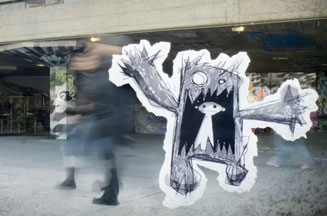
It uses an animation to portray him as trapped inside a rampaging monster
until the charity intervenes, after which he emerges as a vulnerable young
man.
The coalition claims the ad implies that autistic children are monstrous and
lays the blame on the child for lashing out, rather than on the bullies.
More than 2000 people have joined a Facebook group to protest (see box) and
about 50 people have complained about the ad to the ASA.
The campaigners said they did not question Action for Children’s
motivations, but that its approach was liable to increase stigma around the
condition and be offensive.
Responding to the criticism, Action for Children said: ‘Dan approved the
concept and drawings, which depict how he saw himself and what he felt he
needed help with. The animation in the ad is a representation of Dan’s
feelings of anger and frustration, not of autism.
‘We do not believe that the experiences and perceptions articulated by Dan
in the ad present autism as the problem.Rather, they highlight the avoidable
confusion and difficulties experienced when the support that is needed – and
people are entitled to – is not forthcoming. It is aimed at reinforcing the
positive effect of timely support.’
Facebook comments
‘The ad shows autism as a monster that takes over children. This is wrong!’
Susan Wormald
‘This is discrimination of the highest order.’ Thomas MacCallum
‘I have no desire at all to string up Action For Children; my only aim is to
get them to under-stand what is wrong in their ad.’ Janine Dixon-Wilkinson
‘I am almost speechless. Thank you for bringing it to everyone’s attention’.
Tanya Hunt
—
Ari Ne’eman
President
The Autistic Self Advocacy Network
1660 L Street, NW, Suite 700
Washington, DC 20036
http://www.autistic advocacy. org
732.763.5530

NAS Response on Action for Autism Advert
We have received several complaints from parents and people affected by autism about an advert produced by children?s charity Action for Children.
In particular, people have written to the NAS expressing their concerns about the way the advert depicts autism with a monster cartoon. They fear that the advert could be interpreted as suggesting that autism is the fault of the individual and that behaviours associated with autism can and should be corrected.
We have contacted Action for Children to share your concerns and will continue to pass on any further comments we receive.
Autism is a serious, lifelong and disabling condition that affects an estimated half a million people in the UK. It is not the fault of the individual or the result of the way someone is brought up. Better public understanding is crucial in order to end discrimination and help people with autism enjoy the same rights and freedoms as the rest of society. The NAS is campaigning to improve public understanding and attitudes to autism. For more information, visit our campaign website at www.think-differently.org.uk

Tony Attwood Condemns Action for Children’s Monster Dan TV Adverts
http://the-newrepublic.blogspot.com/2009/01/attwood-speaks-monster-ad-slammed.html
First Published Wednesday, 11 February 2009

(CBS) Five years ago, 60 Minutes correspondent Lesley Stahl met an 8-year-old boy named Rex, who seemed to embody in one small person some of the most intriguing mysteries of the human mind – how it is that stunning ability and profound disability can coexist within the same person.
Rex was born blind, with brain damage so severe his mother Cathleen was told he might never walk or talk or do much of anything, and yet he has talent beyond anything most of us can imagine.
60 Minutes was so captivated by Rex that we decided to follow him, to keep coming back to see what the years would bring. The last time Stahl visited Rex and his mom, he was 10. Today he’s 13 and he’s as joyful as ever.
But before you meet Rex today, meet Rex as Stahl first did.
Rex Lewis-Clack then, as now, was a study in contrasts: blind and full of enthusiasm, yet unable to dress himself, or even carry on a basic conversation.
But with everything Rex couldn’t do, he could perform a musical feat. Stahl played him a song he had never heard, with his old piano teacher singing along. Rex, who can’t see the keys, was able to replay the entire sequence, after hearing it only once.
Rex is a musical savant, one of a handful of people in the world who share a mysterious combination of blindness, mental disability, and musical genius.
But away from the piano, he was easily upset, confused by basic concepts, such as the difference between a square and a circle, and unable to find his way around the apartment he’d lived in his whole life.
If you’re interested in learning more about Rachel Flowers and her music, click here to visit her MySpace page.
Music seemed to be Rex’s only real connection to the world — to normalcy. And the question was how far it could take him.
Now, five years later at age 13, he is playing Debussy for audiences around the country.
He’s grown more than a foot since Stahl saw him last, and his technique on the piano has improved dramatically. But the answer to how far Rex has come is more complex, like the savant mystery itself.
Rex greeted Stahl with the same warmth and enthusiasm as ever. “Can I give you a big hug?” he asked.
But he seemed to forget that Stahl already knew his mother Cathleen.
Rex still has the magical ability to hear a piece of music one time and retain it, and he’s taking that into a whole new realm by singing. Stahl watched as Rex’s voice teacher Angela Rasmussen sang him a song he’d never heard before, Schubert’s Ave Maria in Latin.
Stahl thought the song was upsetting Rex, since he plugged his ears and started making noises. But we were wrong – Rex played and sang the song, again, after a single hearing – in Latin.
Sara Banta, Rex’s piano teacher, is pushing him to improvise and transform music into different styles, like asking Rex to play the song Blue Moon, which he’d just heard for the first time, in the style of Mozart.
“The more he improvises, he gets into new and wilder things which is fun for him. And it’s creative,” Banta explained.
Banta said she doesn’t do that as much with other students. “They don’t do it as well.”
Rex was born blind, with a giant cyst in his brain. He developed severe autistic symptoms: small noises would make him scream, and he kept his hands balled up in fists.
“That became the way he would be,” says his mother Cathleen, holding her hands up, clenched. “You’d have to peel his fingers open.”
But then, an unexpected breakthrough happened, when Rex’s father brought him a keyboard for his second birthday.
“He pulled his hands back up at first. And I thought, ‘Oh, now what am I’m gonna have to trick him into putting them back.’ All of a sudden, he overcame his own sensitivity because he was so intrigued,” Cathleen remembers.
Rex was hooked. The keyboard was all he wanted to do, even when his body couldn’t do it anymore – he’d literally fall asleep on the keyboard.
As his skill at the piano grew, so came other skills. Rex learned to walk, and talk, even run – all things he was never expected to do. Two years later, Rex was spelling, skiing, and today, exchanging e-mails with a Swedish pen pal.
But there are still barriers music hasn’t helped transcend – those hands that fly across the keyboard still can’t button a button, or guide his foot into a shoe. Even Velcro straps are challenging.
But Rex is full of positive surprises too, like defying the conventional wisdom that savants can only parrot back what they hear.
Every Saturday, Rex spends four hours with David Pinto, who has started an Academy of Music for the Blind, and is helping Rex turn his improvisations into original pieces of music.
“He’s composed about a dozen wonderful little piano pieces that are perfect for intermediate students,” Pinto explains. “I had him play them into the computer, so we could print it out.” He handed Stahl a printed book of Rex’s compositions.
Pinto believes Rex is truly creative. “Rex is beginning to be a little composer.”
The big challenge for Rex as a musician, Pinto believes, is a bit of a paradox. The savant gift that gives him such prodigious talent, also robs him of some of what makes music so powerful to the rest of us – real emotion.
“To convey emotion in a piece, you need loudness and softness and crescendos and decrescendos,” he says. “It’s amazing to me that he doesn’t naturally take to those things.”
Pinto says Rex does hear them, “But they’re not important to him. These are emotional things. This is conveying meaning on an emotional, human level. Those things are not significant to him as much.”
It’s a problem shared by many of David’s students, and why he feels it’s so important to bring them together and foster human connections through their music.
A perfect example is 14-year-old Rachel Flowers, who Stahl first met three years ago, when she and Rex worked on movement together with Pinto.
Back then, Rachel had just begun teaching herself to play the flute. Today she’s composing elaborate pieces of music for Jazz ensembles, recording every track herself.
Pinto considers Rachel “super talented.”
Rachel is much higher-functioning than Rex, but still, David says, she has similar problems connecting her music with stories or feelings.
“I asked her, ‘Tell me some possible lyrics.’ She had no idea,” he says. “Any lyrics whatsoever.’ Okay, so I said, ‘Let’s give a story about something that made you angry.’ She couldn’t.”
“I said, ‘Okay, play me something sad.’ She couldn’t. And that astounded me, to see how deep these kids go. But if you just move 10 degrees to the left, how shallow. They are fonts of wisdom and you’re amazed. But move a little bit left, they don’t have anything to say,” Pinto adds.
Asked if he thinks it’s possible for him to teach Rex and the other children to imitate emotion, Pinto tells Stahl, “Yes. And I think like all things, there’s a hope that imitation will lead to understanding. “
So when Pinto has Rachel play Rex’s new composition, he’s trying to use the extraordinary musical bond they share to build something that does not come naturally: a simple friendship.
“It’s still very hard for him to be friends. To have that deep connection,” Rex’s mom explains.
Cathleen hopes that music can help create a place for her son in the mainstream world, and it’s already happening Rex leaves his special ed classroom every day for the school choir and band, and while he still can’t fully relate to the other kids, with Rex, you never know when there’s going to be a breakthrough, as Cathleen learned from David Pinto about something she’d given up on because of Rex’s continuing aversion to touching things.
“I saw this twinkle between David and his wife. And, ‘What’s going on?’ And he said, ‘Well, we were gonna keep it as a surprise for you. But Rex is reading Braille,'” Cathleen remembers. “First I didn’t believe it. I said, ‘I’d like to see that. Now.'”
“And at that point, you know, to see the tears in her eyes. She was deeply moved,” Pinto remembers of Cathleen witnessing this breakthrough.
Cathleen says Rex finished reading his first Braille book this summer: “Frog and Toad Are Friends.”
“They said, ‘He may never walk.’ He walked. ‘He may never talk.’ He talked. ‘He’ll never read.’ He’s reading,” Stahl points out.
“I always think that you, part of his laugh and little twinkle is like, ‘Oh, I know more than she does.’ It’s like he’s got his own timing. And I think that that’s a good lesson never to say that he’s not gonna do it. It’s just when he’s ready, and when his brain is ready,” Cathleen replies.
In all the years Stahl has known Rex, she never thought he would be able to sit at the piano with her and play an improvised duet, much less enjoy it.
But they did just that.
“Every now and then he would while he was playing get very excited and make a noise and go, ‘Yes,’ and he’d have a look of joy and fun,” Stahl observed.
“I mean, that’s what’s wonderful. His joy, his laughter. He loves music. It’s so big in him,” Pinto says.
“I think that the possibilities are endless,” piano teacher Sara Banta says. “The more I’m with him, the more I realize that there’s much more to discover than I’ve even gotten close to finding.”

http://www.amazon.com/Rex-Mother-Autistic-Transformed-ebook/dp/B001MJ07RO
http://www.amazon.co.uk/Rex-Mother-Autistic-Transformed-ebook/dp/B001MJ07RO
For years Cathleen has thought about writing a book about her son, and she’s finally done it. It’s called “Rex: A Mother, Her Autistic Child, And The Music That Transformed Their Lives.”
Jan
12

HEADLINES
“Raymond Singh found guilty of murdering his wife Wendy –
Wendy Singh’s 15 year old autistic son is now in the care of his auntâ€:
“MMR doctor Andrew Wakefield fixed data on autismâ€:
http://www.timesonline.co.uk/tol/life_and_style/health/article5683671.ece
“How the MMR scare led to the return of measlesâ€:
http://www.timesonline.co.uk/tol/life_and_style/health/article5683687.ece
“Fears of mumps outbreak as 20,000 children wait for jabâ€:
“Adult psychology service crisisâ€:
http://www.thisisjersey.com/2009/02/07/adult-psychology-service-crisis/
“Parents of autistic child take case to Supreme Court … Free appropriate public education at center of suitâ€:
http://www.reporterherald.com/news_story.asp?ID=21333
“Disability activists call on Action for Children to withdraw autism ad/NAS/Tony Attwood Response to Adsâ€:
http://aspie-editorial.blog-city.com/fwd_disability_activists_call_on_action_for_children_to_wit.htm
“Bill must recognise autistic people face discrimination, NAS saysâ€:
“TreeHouse urges you to ask your MP to support the Autism Bill on 27 Februaryâ€:
“Jacobus ten Broek Disability Law Symposiumâ€:
http://aspie-editorial.blog-city.com/fwd_jacobus_ten_broek_disability_law_symposium.htm
“Too many mentally ill in jailsâ€:
http://news.bbc.co.uk/2/hi/uk_news/7867398.stm
“Judge in autism case injects insult to Sarah Palinâ€:
http://www.nydailynews.com/news/2009/02/04/2009-02-04_judge_in_autism_case_injects_insult_to_s.html
“Blind man’s 3 hour trek in NHS snub … A blind epilepsy patient was forced to walk home five miles from hospital at night – after nurses refused to find him transport.
Paul Hilton, 48, had been rushed by ambulance to A&E with a seizure – but forgot his white stick.â€:
“Blind man stranded after guide dog attackedâ€:
“Green light bulb fears rejectedâ€:
http://news.bbc.co.uk/2/hi/uk_news/politics/7858156.stm
“First-ever concert for the deaf to be staged in Toronto … The Emoti-Chair, an audio-tactile device developed by Ryerson University, promises to ensure good vibrations for the hearing impaired by translating live music into mechanical responsesâ€:
http://www.guardian.co.uk/music/2009/feb/05/emoti-chair-first-deaf-concert

RESEARCH
“MIT: Multiple genes implicated in autismâ€:
http://www.eurekalert.org/pub_releases/2009-02/miot-mmg020409.php
“Anxiety in children and adolescents with autism spectrum disordersâ€:
http://www.citeulike.org/user/gedragstherapeut/article/3988192
“First gene discovered for most common epilepsyâ€:
http://www.scientificblogging.com/news_releases/first_gene_discovered_most_common_epilepsy
“Genetic roots of synaesthesia unearthedâ€:
“Adults and Asperger Syndromeâ€:
http://www.medicalnewstoday.com/articles/137989.php
Article Release Date Jan 2009 “Mental health among adults in England, 2007â€:
http://www.medilexicon.com/medicalnews.php?newsid=136746
“Computer games may fight obesity … “We are particularly interested in examining the effects of playing GHWT on child and adult obesity, autism, stroke patients, disengaged communities and health and mental well-being in the workplace.â€:
http://www.google.com/hostednews/ukpress/article/ALeqM5j6l8Nwj01aZHLH5Zf4FiEZdjl41g
Blondie drummer launches study into benefits of playing guitar “Why drumming can help you live longer … Drumming has a number of benefits. It can energise or relax. It can foster a sense of playfulness or release anger and tension. It can also help in the conquering of social isolation and the building of positive relationships.â€:
Good Childhood Report Set for Release “Children should be allowed to be sad … What makes children unhappy is to ask them to carry loads that are beyond their strength. Too many children are in this position. They need grown-ups able to demonstrate that painful experiences can be coped with and able to protect them from being weighed down with anxieties that are too much for them. That leaves room for happiness and ordinary, manageable unhappiness.â€:
http://www.guardian.co.uk/commentisfree/2009/feb/01/children-family
“Panic attacksâ€:
http://www.guardian.co.uk/lifeandstyle/panic-attacks
“Anxietyâ€:
http://www.guardian.co.uk/lifeandstyle/anxiety
“The buzz on tinnitusâ€:
http://well.blogs.nytimes.com/2009/02/02/the-buzz-on-tinnitus/
“Time to Change Campaignâ€:
http://aspie-editorial.blog-city.com/stephen_fry__time_to_change.htm
Times Online “Schizophrenia is the modern leprosyâ€:
http://www.timesonline.co.uk/tol/comment/columnists/sathnam_sanghera/article5663115.ece
“LEGO ‘walker’ disarms assumptions about human gaitâ€:
http://www.newscientist.com/article/dn16570-lego-walker-disarms-assumptions-about-human-gait.html
EDUCATION
“Suspended teacher accused of having student voted out of class to appealâ€:
http://www.floridatoday.com/article/20090130/BREAKINGNEWS/90130011/1086
“School action urged on behaviour – Many SEN children failed by school systemâ€:
http://news.bbc.co.uk/2/hi/uk_news/education/7873125.stm
“An interactive sensory room is helping Rosehill School, St Ann’s, Nottingham, pupils to learnâ€:
“Special needs poser for borough’s school … Parents can have their say on plans to shake up provision for pupils with severe and complex communication difficulties such as autism.â€:
“Pets can help college students cope with stress & lonelinessâ€:
http://aspie-editorial.blog-city.com/pets_can_help_college_students_cope_with_stress__loneliness.htm
Cleverness Squared “KenKen – New puzzle challenges math skillsâ€:
http://www.nytimes.com/2009/02/09/arts/09ken.html?em
EMPLOYMENT
Northern Ireland (Video)“Larne Company dedicated to helping people with disabilities get into workâ€:
http://www.bbc.co.uk/newsline/content/articles/2009/02/05/family_focus_acceptable_enterprises_feature.shtml
Acceptable Enterprises (Larne) Limited:
“Newport man launches national coach service … Peter Young(AS), 27, launched UK Express Coaches yesterday morning at Newport bus station yesterday.â€:
http://www.southwalesargus.co.uk/news/4095058.Newport_man_launches_national_coach_service/
“Success for factory for disabled … A furniture factory for disabled workers in Aberdeen which was fighting for survival has reported record sales for January.â€:
http://news.bbc.co.uk/2/hi/uk_news/scotland/north_east/7878665.stm
“I was laid off twice in a yearâ€:
http://news.bbc.co.uk/2/hi/uk_news/england/shropshire/7869765.stm
“Auties.orgâ€:
Individuality, Diversity, Equality, Achievement
Auties..org is an Aspie & Autie friendly site for all people on the Autistic Spectrum who are ready to dare reach out to occupation and employment, open the doors to the community and market their abilities directly to the public and for those interested in supporting these pioneers.
“Prospectsâ€:
http://www.nas.org.uk/nas/jsp/polopoly.jsp?d=473&a=2348
“AutismJobsâ€:
Linking job seekers with vacancies in work related to autism, Aspergers and ASDs
http://www.autismjobs.org/?section=00010009
“Current job vacancies within the NASâ€:
http://www.nas.org.uk/nas/jsp/polopoly.jsp?d=170
For further employment information, please viewâ€:
http://aspie-editorial.blog-city.com/employment_on_the_autism_spectrum.htm
GENERAL/HUMAN INTEREST
Jamaica “Conversations with mothers of autistic and disabled childrenâ€:
http://www.jamaica-gleaner.com/gleaner/20090204/health/health2.html
“Dog is ‘magic leash’ for autistic boyâ€:
http://www.emporiagazette.com/news/2009/jan/31/dog_magic_leash_boy_autism/
“A savvy savant finds his voiceâ€:
http://www.theaustralian.news.com.au/story/0,25197,24986084-30417,00.html
“America’s Next Top Model finalist turns to game designâ€:
http://www.joystiq.com/2009/02/04/americas-next-top-model-finalist-turns-to-game-design/
“Communication on the Spectrum(Includes Resources):
http://aspie-editorial.blog-city.com/communication_on_the_autism_spectrumincludes_resources.htm

SINGAPORE
“Disability Portal – Autism Spectrum Disorderâ€:
http://www.disability.org.sg/autism/

“Autism Help and Advice in Singapore – The most comprehensive guide for autism related information in Singaporeâ€:
http://singaporeautism.blogspot.com/2008/09/table-of-contents.html

Autism Association
Blk 381, Clementi Ave 5, #01-398 Singapore 120381
Tel: (65) 6774 6649
http://web.singnet.com.sg/~autism/

Focus on Individual Learning
408A River Valley Road, Singapore 248306
Tel: (65) 6738 3240
http://www.focusonindividuallearning.com/

EVA Psychology Centre (Stars Children’s Clinic)
1 Orchard Boulevard, #11-05A Camden Medical Centre, Singapore 248649
Tel: 6235 9092 / 9230 7410
http://www.evapsychologycentre.com/

Dynamics OTC
583 Orchard Road, #13-02 Forum the Shopping Mall, Singapore 238884
Tel: (65) 6100 9235

Children’s Partnership
43 Watten Drive
Tel: (65) 6468 8364
http://www.childrenspartnership.com.sg/

Autism Resource Centre
6 Ang Mo Kio St 44, Singapore 569253
Tel: (65) 6323 3258

Hand in Hand OTC
91 Tanglin Place, #04-02, Singapore 247918
Tel: (65) 6738 6223
http://web.singnet.com.sg/~hihotc/

Eric Chen – Autism Awareness Website

Adult Autism Support Listings
Day Activity Centres
Autism Youth Centre (Age: 12-21)
Blk 425 & 426, Hougang Avenue 6, #01-253, Singapore 530426
Tel: (65) 6287 4727
http://www.autismlinks.org.sg/

St Andrew’s Autism Centre DAC (Age: 19-55)
Blk 33, Bedok South Ave 2, #01-319, Singapore 460033
Tel: (65) 6441 9575

Emmanuel Activity Centre (Age: 12+)
414 Tampines Street 41, #01-301, Singapore 520414
Tel: (65) 6787 3200

AWWA Centre for Caregivers
11 Lorong Napiri, Singapore 547532
Tel: (65) 6511 5280

International Asperger Parent Support Group

Rainbow Center
501 Margaret Drive, Singapore 149306
Tel: (65) 6472 7077
http://www.rainbowcentre.org.sg/

Singapore’s Autism Schools
http://iautistic.com/autism-school-singapore.php

“WorldWise Quiz: Singaporeâ€:
http://travel.nationalgeographic.com/places/places-of-a-lifetime/singapore-quiz.html

“Singapore Facts, Information & Historyâ€:
http://travel.nationalgeographic.com/places/countries/country_singapore_cntry.html

“Singapore Photo Galleryâ€:
http://travel.nationalgeographic.com/places/photos/places-singapore-gallery-2.html
ADD/ADHD
“7 year-old boy is youngest case of suicide attemptâ€:
http://www.medilexicon.com/medicalnews.php?newsid=138177
“Girls with disorder overlookedâ€:
http://thescotsman.scotsman.com/education/Girls-with-disorder-overlooked.2755479.jp
“CompuMed Inc.’s exhibit at 2009 Masters of Pediatrics Conference Program draws attention to cardiac screening programs for childrenâ€:
http://www.pr-inside.com/compumed-inc-s-exhibit-at-2009-masters-r1044935.htm
“ADHD drug, Ritalin, possibly addictive – may cause changes in a person’s brain similar to that of cocaine.â€:
http://psychcentral.com/news/2009/02/03/adhd-drug-ritalin-possibly-addictive/3898.html
“Supernus Pharmaceuticals initiates phase Ila clinical trial for SPN810 in conduct disorder … Serious conduct problems include symptoms of engaging in fights and knowingly destroying property. It has been reported that up to 25% of pediatric patients treated for ADHD exhibit such symptoms.â€:
http://www.medicalnewstoday.com/articles/137498.php
“What if my child begins to exhibit symptoms of ADHD?â€:
http://www.health.com/health/condition-article/0,,20252266,00.html
Sleep Apnea
Press Release “Comfortable CPAP alternatives are provided by sleep apnea dentist – It is estimated that 80% of ADHD children have sleep apnea.â€:
ADRES “Adverse Drug Reaction Electronic System(Adverse Drug Reactions Website)â€- This website provides patients, doctors, and other medical professionals with a comprehensive examination of adverse drug reactions (ADRs), side effects, and other safety information for both prescription and over-the-counter medications. Our goal is to allow users of our website make informed decisions when taking (patients) or prescribing (doctors) drugs. We are providing unmatched information and analysis tools.
http://www.adverse-drug-reaction.net/
“adders.orgâ€
Our objective is to promote awareness to AD/HD (Attention Deficit/Hyperactivity Disorder) and to provide information and as much free practical help as we can to those affected by the condition, both adults and children, their families in the UK and around the World via this website.
“ADDISS†The National Attention Deficit Disorder Information and Support Service…
http://www.addiss.co.uk/index.html
“ADDAâ€:
“hi2u ADHD Pagesâ€:
“CHADDâ€:
http://www.chadd.org/am/CustomPages/home/CHADD_Home.htm?CFID=2282059&CFTOKEN=38105335&jsessionid=f2303343221169802693562
SPORT
“Olympic gold medal biker joins twin towns challengeâ€:
http://www.northamptonchron.co.uk/news/Olympic-gold-meal-biker-joins.4934105.jp
“Trek the Inca Trail – 22-31 May, 2010â€:
http://www.nas.org.uk/nas/jsp/polopoly.jsp?d=1863
“Trek Ben Nevis – 19-21 June, 2009â€:
“Flora London Marathon 2009â€:
http://www.nas.org.uk/nas/jsp/polopoly.jsp?d=1823
“It’s back! The London to Paris Bike Ride 2009 – 15-18 Mayâ€:
http://www.nas.org.uk/nas/jsp/polopoly.jsp?d=1860
5-8 June, 2009 “Five Countries Bike Ride – England, France, Belgium, Holland and Germany”:
http://www.nas.org.uk/nas/jsp/polopoly.jsp?d=1970
“Racecourse Bike Ride – 12 July, 2009â€:
http://www.nas.org.uk/nas/jsp/polopoly.jsp?d=2116
“Trek Hadrian’s Wall – 7-9 August, 2009â€:
http://www.nas.org.uk/nas/jsp/polopoly.jsp?d=2088
“Trek Jordan 2009 – 10-14 Septemberâ€:
http://www.nas.org.uk/nas/jsp/polopoly.jsp?d=1833
“Cycle India – 27 November – 6 December, 2009â€:
http://www.nas.org.uk/nas/jsp/polopoly.jsp?d=1832
“Sky Diving”:
http://www.nas.org.uk/nas/jsp/polopoly.jsp?d=1726
MUSIC
“Rex: A musical savant’s remarkable stridesâ€:
“Why drumming can help you live longer … Drumming has a number of benefits. It can energise or relax. It can foster a sense of playfulness or release anger and tension.
“It can also help in the conquering of social isolation and the building of positive relationships.â€:
“Stars Shine for Autism 2009 – 12th March, 2009
Featuring Alfie Boe and the London Chamber Orchestraâ€:
http://www.nas.org.uk/nas/jsp/polopoly.jsp?d=1972&a=18050
“The AutisMusic Projectâ€:
ART
“Eric Jiani … It has been said that Eric Jiani’s art defies classification but its impact is unmistakable. You are invited to take a long look at the detail of his pictures and then make up your mind for yourself. â€:
http://www.eric-jiani-artist.com/
“How a £50 000 fund is adding colour to disabled artists livesâ€:
“Squease’ a new product at the Royal College of Art this month … It’s a garment that allows the wearer to apply deep pressure to their body, to create a calming effect. It also has integrated headphones, which help to reduce noise levels and discomfort for people with hypersensitive hearing.â€:
http://www.nas.org.uk/nas/jsp/polopoly.jsp?d=253&a=18712
Rozagy “Autistic artist calls for joining autistic culture movementâ€:
http://www.emaxhealth.com/1/119/29132/artist-autism-calls-join-autistic-culture-movement.html
“Creativity exhibitions showcase work by autistic adultsâ€:
http://www.nas.org.uk/nas/jsp/polopoly.jsp?d=1665&a=18751
“Art Auction – 26 February 2009â€:
http://www.nas.org.uk/nas/jsp/polopoly.jsp?d=2118&a=18049
“Enter the Hoffman Foundation’s prize for drawing and paintingâ€:
http://www.nas.org.uk/nas/jsp/polopoly.jsp?d=253&a=17569
“ARTROOM ……..where under 17s can make and display art onlineâ€:
http://www.saatchi-gallery.co.uk/artroom/index.php
MOVIES/ENTERTAINMENT
“Adam Godley nominated for Laurence Olivier Awardâ€:
http://www.nas.org.uk/nas/jsp/polopoly.jsp?d=2122&a=18693
“Sundance 2009 Review: Max Mayer’s Adamâ€:
http://www.firstshowing.net/2009/01/22/sundance-2009-review-max-mayers-adam/
“Actors for Autismâ€:
http://www.actorsforautism.com/
BOOKS
Marla Comm (1956 – 2008) “Severe Autism, Denied Support: Struggling to Survive in the Mainstreamâ€
Authors: Leonard Jayson and Marla Comm
http://books.google.com/books?id=jKiK7XE7QYcC
“Employment for Individuals with Asperger Syndrome or Non-Verbal Learning Disability: Stories and Strategiesâ€
Author: Yvona Fast
http://www.jkp.com/catalogue/book.php/isbn/9781843107668
“Visual Perception Problems in Children with AD/HD, Autism, and Other Learning Disabilities: A Guide for Parents and Professionalsâ€
Author: Lisa A. Kurtz
http://www.jkp.com/catalogue/book.php/isbn/9781843108269
“Autism and Lossâ€
Authors: Rachel Forrester-Jones and Sarah Broadhurst
http://www.jkp.com/catalogue/book.php/isbn/9781843104339
 “Weird, wild and wonderful – a naturally autistic taleâ€
Author: Stuart Nicklen
This is a father’s tale, the story of Laurence, who is a gorgeous, loveable boy who has classic autism, as well as severe learning difficulties. Stuart tells how he tries to support Laurence and enter his world. His account is very readable, lively and moving.
http://www.autism.org.uk/nas/jsp/polopoly.jsp?d=433&a=18489
 “Helping Kids and Teens with ADHD in School: A Workbook for Classroom Support and Managing Transitionsâ€
Authors: Joanne Steer and Kate Horstmann
Illustrated by Jason Edwards
http://www.jkp.com/catalogue/book.php/isbn/9781843106630
“What Did You Say? What Do You Mean?: 120 Illustrated Metaphor Cards, plus Booklet with Information, Ideas and Instructionsâ€
Author: Jude Welton
Illustrated by Jane Telford
http://www.jkp.com/catalogue/book.php/isbn/9781843109242
MOVIE

Disney’s The Secret of the Magic Gourd (Only on DVD) Rated G
Synopsis:
Experience a magical story about the boundless limits of imagination and the strength we each have inside us with Disney’s heartwarming film The Secret Of The Magic Gourd. Based on the beloved children’s novel and featuring the voice talent of High School Musical’s Corbin Bleu, this wondrous fantasy is sure to delight the entire family. It’s a truly inspiring story that captures the wonder and awe of childhood, raves Carey Bryson of KidsTVMovies.About.com. When an inquisitive 11-year-old discovers a mythical, magical gourd while fishing, he has no idea of the trouble that lies at the end of his hook. With the ability to grant any and every wish, The Magic Gourd attempts to make all of the boy’s dreams come true, but instead succeeds in turning his world upside down. Enjoy every moment of this enchanting adventure as a curious child discovers that the best things in life are those he earns himself.
Official Website:
http://adisney.go.com/disneyvideos/liveaction/magicgourd/
VIDEO GAME

Wii Fit
http://www.nintendo.com/wiifit/launch/
“Does the Nintendo Wii help your autistic child?â€:
“Mom Embracing Autism – Wii Love it!â€
(Article published Sun. Jan 25th, 2009)
http://momembracingautism.blogspot.com/

“Animal Crossing Creating Connections via Video Gamesâ€
SCIENCE IN SOCIETY

“Special Feature: Darwin 200â€:
2009 is both the 200th anniversary of his birth and the 150th anniversary of the publication of his most famous and important book, On the Origin of Species.
http://www.newscientist.com/special/darwin-200

“Valentine’s Day Facts: Gifts, History, and Love Scienceâ€:
http://news.nationalgeographic.com/news/2009/02/090211-valentines-day-gifts-history.html
AUSTRALIANÂ BUSHFIRES
“Service, National Day of Mourning for Victorian bushfiresâ€:
http://www.theaustralian.news.com.au/story/0,25197,25044698-601,00.html
“Essential information for people affected by the bushfiresâ€:
Take care,
Julie

First Published Thursday, 12 February 2009

By Sandi Busch and Ben Markle
Animal Crossing is a game for the Nintendo GameCube but it can also be played on the Wii. There’s also a version for the Nintendo DS (Animal Crossing: Wild World) and a new game for the Wii (Animal Crossing: City Folk). Find more information at http://animal-crossing.com. There’s even an online AC community: www.AnimalCrossingCommunity.com.
Autism Asperger’s Digest (bimonthly magazine on Autism Spectrum Disorders)
http://www.autismdigest.com/

Every day just about every parent of a child on the autism spectrum questions: “Am I doing enough for my child? If only there was more time …†With overflowing schedules, therapy appointments, managing behavioural supports, and meetings at school, parents can feel constantly pressured to be “in teaching mode†every precious minute.
With the time constraints we all feel, combined with an almost perseveration-like focus on therapy that would make any spectrum child proud, it’s easy to overlook a critical step along our journey through autism: establishing a true relationship with our child. A warm, supportive, fun, engaged relationship. This too requires work, but not always hard work or time spent with a child in rebellion. In fact, a pathway to the relationship of our dreams can actually be found right under our proverbial noses. Unfortunately, the suggestion I’m about to make has a high probability of being an activity you’ve been told to significantly reduce or even extinguish from your child’s life … special interests. To be more specific, video games.
Many parents share a concern for their child’s passion with video games, the computer or TV/DVDs. And, just as many emerging studies are touting the negative outcomes of allowing our kids to engage in such activities. Yet so many spectrum children have a special interest that involves electronic media. Might there be another perspective? I believe there is. And, I say this because in our house, we’ve made video games work to our advantage. Imagine combining a fabulously fun time with oodles of teaching opportunities while simultaneously creating strong emotional connections. Imagine doing that while playing video games. Shocked? Don’t be. It is possible. My son, Ben, and I have a story to tell that is especially important if you’ve seldom spent time playing video games and believe it’s one special interest that should be abolished. Keep reading.
My son’s special passion is and always has been video games. Over the years I’ve found that sharing this interest with him has built a bridge between us, one that facilitates trust, interaction and communication. Even though it is typical for us to play video games together, I was taken by surprise one weekend when we sat down to play a game we had just purchased., called Animal Crossing (Game Cube). I was amazed by the multitude of chances this game presented to teach critical life skills and lessons to my son with autism. It opened my eyes to the fresh experiences waiting to be found in the toys, games and electronic gadgets that define our children’s unique interests!
Playing Animal Crossing is like putting shredded zucchini into brownies … your child gets all the nutrition without the fuss. The “teaching†is all a part of playing the game. Ben and I have had so much fun playing Animal Crossing that we are excited to have this chance to share it with you. Ben is providing the inside scoop – describing what the game is about. That leaves me with the “boring†part – highlighting the opportunities to teach communication, emotions, letter writing and living skills while playing this extraordinary game. Let’s get started! Ben is up first.

Have you heard about Animal Crossing? I’ve played it a lot and it’s a different kind of video game than most of the others you find on the store shelves. In Animal Crossing your character is a cartoon-like person but all the other characters are animals. You live in a town that operates in real time, so the seasons change, and holidays and even your birthday are celebrated. You can decorate your own house, plant trees and flowers, talk to the animals, and participate in a bunch of different town activities.
When the game starts you’re riding in a train but you don’t know where it’s going. A cat named Rover sits down and asks, “What’s your name?†and “Where are you going?†You type in a name for your character and create a name for your town. Rover also asks questions to verify your gender. Be warned though, Rover is clever. He doesn’t ask if you’re a girl or boy. When you tell Rover your name a box appears with three choices and the answer you pick determines if your character is a boy or girl. Rover makes a phone call to a friend – Tom Nook – to be sure you’ll have a place to live in your new town.

Tom Nook, a raccoon who runs the local store and conveniently happens to sell houses, meets you at the train station and lets you choose from four homes. The houses are rubbish to start with but hey, he lets you buy it with the little money you happen to be carrying and then he tells you to work at his store to begin paying your mortgage.
Working for Tom Nook helps pay for your house but it is also training that teaches the game basics. Your training doesn’t last long and when it’s over you’re free to start exploring the town, talking to the animals, decorating your house and buying stuff from Nook’s store. (P.S. Every time you buy furniture or clothing he gives you a raffle ticket. At the end of every month he holds a lottery and you can win stuff for your house.)

Just remember that during training you only pay off a small part of your mortgage so you have to earn and save money. The fun part is that once you pay off the loan, Tom Nook will upgrade your house in stages. Hint: You want to upgrade right away! If you get all the upgrades and you’re the first to finish paying off your house, he puts a gold statue of your character in front of the train station!
Speaking of the train station, you can build other towns on additional memory cards and travel to them by train. Every time you ride the train you’ll talk to either Rover or a mysterious character named Blanca who sometimes appears. She is a cat that doesn’t have a face. She asks you to draw one for her and then you get to have fun drawing a face. She always suggests you should not tell anyone about her … she’s just an average traveler. (How many average cats do you know with no face?)

Your House
There are many ways to get items to use to decorate your house. Tom Nook sells them in his store, you can help the townspeople and they will reward you with items, and you can find things buried in the ground. A camel named Sahara comes to town bringing rare carpeting to trade. Wendell, the Wandering Hungry Walrus, also stops by and if you feed him a fish (which you have to catch yourself in the stream or ocean) he will give you a rare wallpaper. And then there’s Crazy Redd … buyer beware! Crazy Redd is a sly fox who sometimes brings his Black market to town. He sometimes (not always) offers rare items for sale that you can only get from Crazy Redd. If they fit your theme then you’ll probably want them, even if they are way too expensive!

You can create really cool themes in your home. My favorites are space (the carpet looks like the surface of the moon, the wallpaper is all stars and you can get items like a space shuttle and a meteor) and the “kiddie†theme (it looks like a playroom). There’s also a “lovely†theme (lots of pink, hearts, a vanity and even a pink kitchen sink) and you can even turn your house into a beach or a desert if you like!

Your Town
Just like a real town, there is a police station, a post office (where you can pay your debt and mail letters) and a museum. You can donate items you collect – paintings, dinosaur bones, bugs and fish – to Blathers the Owl who runs the museum. There is a special clothing store run by two porcupines where you can design your own clothes! You can put the patterns you design on display and eventually the animals will begin wearing clothes with your patterns on them!
The townspeople all have unique personalities. Just like in real life, many are friendly but some are a bit gruff. Another interesting thing about the townspeople is that you can go into their houses to see how they have decorated – they have endless ideas for your own house.

Holidays
Many holidays are celebrated in Animal Crossing. It’s a fun time, when unique characters and the town’s mayor – a tortoise named Tortimer – appear and you can get special items. Franklin the Turkey comes to town on Thanksgiving. You can save him from being eaten by bringing him the silverware from the town’s picnic table. (You have to find him first!) And on Halloween a character named Jack lurks around. If you give him candy he gives you Halloween themed furniture. Beware though, if you run into the townspeople they will TRICK you!

Fun Stuff
Well, the whole game is fun! There’s way too much to tell you everything so I’ll just let you discover the rest on your own.

Mom here again. This is truly an interactive game with an emphasis on communication and so many chances to learn. Here’s just some:
The townspeople will remind you that they love to receive letters – some will even get an attitude if you haven’t written to them. When you choose to write a letter, the screen changes to represent a keyboard, which can be arranged like a typewriter or you can put the letters in alphabetical order. Talk about opportunities to teach spelling, grammar, or simply learn the alphabet if the child is young. If the child is older, it’s a great way to talk about social thinking, people’s feelings and perspective taking.

Ben Recommends
There’s no sense buying a system for just one game, so if you like Animal Crossing you’ll also like: The Mario, Donkey Kong Country, and Kirby series, Smash Brothers Brawl, Wario Land Shake It, and the Sonic Mega Collection. And older audiences, while they will enjoy those, might also like: The Legend of Zelda and the Mega Man series.
Games to avoid:Resident Evil, Mortal Kombat, Wario Master of Disguise (Wario’s other games are great but not this one).
Sandi Busch is a freelance writer and single mom who home-schools her son. Ben is a 15 year old who is learning to build on the strengths of Asperger’s Syndrome and who looks forward to a vocation saving animals.
Reprinted with permission from the January-February 2009 issue of the Autism Asperger’s Digest, a bimonthly magazine on autism spectrum disorders. http://www.autismdigest.com/
First Published Thursday, 12 February 2009

Cross-posting and offline sharing is permitted and encouraged:
Just a reminder that February 15 is the deadline for submitting
proposals for Autreat 2009.
The online submission form at www.ani.ac/aut09cfp .php appears to be
having major problems. If you use it to type in your proposal, it’s a
good idea to save a copy of the proposal in a text file, before
clicking the button to submit the proposal. If the server has a
problem, it could everything you typed in. Save a backup before
hitting the “Submit” button.
Alternatively, you can submit a proposal using the form below, in the
body of this email. Forward this email to proposals @ autreat. com
(remove spaces), then fill in the required information below:
* Your name and title (if any) exactly as you want them listed in
program materials should your proposal be accepted
* Contact information (address, phone, fax and/or email if you have them)
* Title of your proposed presentation
* Detailed description for consideration by the Planning Committee
* Brief (5 sentences or less) abstract exactly as you want it listed
in program materials should your proposal be accepted
* Indicate ONE theme that BEST relates to your proposed presentation:
[ ] Advocacy skills
[ ] Life skills/adaptive strategies
[ ] Helpful support services
[ ] Communication
[ ] Social/interpersona l issues
[ ] Personal/self- awareness/ self-development issues
[ ] Autistic community and culture
[ ] Education
[ ] Employment
[ ] Family issues
[ ] Residential issues
[ ] Disability rights and politics
[ ] Autism research and theory
[ ] Other (describe):
* Indicate which group(s) you believe would find your proposed
presentation of interest. Check as many as apply. Briefly describe
what your presentation would offer to each group:
[ ] Autistic adults
[ ] Autistic teenagers
[ ] Family members of autistic people
[ ] Educators
[ ] Clinicians
[ ] Service providers
[ ] Other (specify):
* Brief (5 sentences or less) presenter bio exactly as you want it
listed in program materials should your proposal be accepted
* Any audiovisual equipment you would need for your presentation
If you have never presented at Autreat before, please also include an
introduction for the Planning Committee summarizing your relevant
experience, including any presentations or other education/advocacy
activities elsewhere, and the nature of your interest in autism and/or
in general disability issues.
PROPOSAL DEADLINE:
February 15, 2009
HOW TO SUBMIT A PROPOSAL
Proposals can be submitted via email to proposals@ autreat. com
(remove spaces), or via
postal mail to ANI at the address below, or submitted online at
www.ani.ac/aut09cfp .php .
WHAT IF I DON’T WANT TO PRESENT, BUT I HAVE AN IDEA FOR A PRESENTATION I’D LIKE TO SEE?
If you want to make suggestions for Autreat presentations, or make
comments about previous presentations or presenters, please fill out
the questionnaire available at www.ani.ac/autplan2 .php.
Autism Network International
P.O. Box 35448
Syracuse NY 13235
USA
Jan
12
First Published Tuesday, 17 February 2009

Laura Dixon
Imagine this: you’re visiting the doctor for help with a common problem like high cholesterol, and as well as a prescription or advice about diet, he hands you a CD. “Play it as loud as you like,†he says as you leave the consulting room.
It might sound strange, but according to some of the latest medical research, it wouldn’t be a completely crazy thing to do. Medical schools across the globe are investigating the links between music and health – and it turns out that music could have a bigger effect on well-being than previously thought.
Dr Michael Miller of the University of Maryland School of Medicine in Baltimore has recently presented research that shows that listening to music can have a positive impact on blood vessel function.
“We had previously demonstrated that positive emotions such as laughter were good for vascular health. So a logical question was whether other emotions, such as those evoked by music, have a similar effect,†he said when the study was released. “We knew that individual people would react differently to different types of music, so in this study, we enabled participants to select music based upon their likes and dislikes.”
The results suggest that when people listen to music that they enjoy, high blood pressure and related cholesterol problems are reduced. Ten volunteers were first asked to not listen to their favourite music for two weeks to desensitise them to it. Then their blood pressure was monitored before, during and after four test phases. In the first, they listened to 30 minutes of their favourite music. In the second, conducted at least a week after the first, they listened to 30 minutes of music that they had identified as making them feel anxious. The third phase, again at least a week later, involved listening to 30 minutes of audio tapes that promote relaxation. And in the final segment the participants watched 30 minutes of a videotape designed to make them laugh. The study took six months to complete.
When the participants listened to music that made them feel good, the study found that tissue in the inner lining of blood vessels dilated on average by 26 per cent, increasing blood flow. Conversely, when they listened to music that they found stressful, their blood vessels narrowed by an average of six per cent. The laughter promoting videotape led to an average dilation of 19 per cent. The relaxation tape saw an average dilation of 11 per cent, but the researchers classified this as not statistically significant, which means it is likely to have occurred by chance and not as a result of the relaxation tape. The results were seen immediately after the experiment as a reaction to the stimulus, rather than a long-term health change.
“Listening to music evokes such raw positive emotions that it’s likely in part to be due to the release of endorphins,†Dr Miller said. “It’s all part of that mind-heart connection that we yearn to learn so much more about. Needless to say, these results were music to my ears because they signal another preventive strategy that we may incorporate in our daily lives to promote heart health.”
The mind-heart connection is currently being explored at universities and music schools all over the world. A joint study by the Max Planck Institute for Human Cognitive and Brain Sciences in Germany and the University of Sussex in the UK has found a clear link between listening to music and the release of hormones in the body. The study showed that after 50 minutes of uplifting dance music, the levels of antibodies in volunteers’ bodies had increased, and that stress hormones had decreased. This means there is a possibility that listening to music can boost your immune system.
And while the soothing effect of music isn’t exactly news – William Congreve wrote that “music has charms to soothe a savage breast†in 1697 – we can now actually see it happen, with MRI and PET brain scans showing exactly which areas of the brain are activated by tempo, rhythm and pitch, and suggesting how they affect our thought patterns. Researchers at Stanford University have found that listening to music can sharpen the brain’s ability to anticipate events and sustain attention. There’s also plenty of anecdotal evidence that listening to music aids pain relief, as it distracts and relaxes patients, as well as acts as an antidepressant. The Royal Northern College of Music (RNCM) in Manchester, UK, investigated these links in a conference at the end of 2008, with musical interludes between speakers.
Music has helped other mental health issues in addition to depression. A study from Glasgow Caledonian University has shown that it can improve the quality of life of those suffering from dementia by increasing their enjoyment and influencing their mood and self esteem. A Sheffield University study found that singing in a group had a positive effect on those suffering from eating disorders: being together for regular practice gave the participants somewhere to safely express their feelings, helped their confidence and allowed them to overcome mental barriers. Of course, it’s not only about the music – the way it is performed and the group setting also can be beneficial.
This group therapy appeal has been significantly useful for people with autism, too, as it brings a sense of social engagement, communication and creative play to what can be a very socially isolated condition. This can lead to increased behavioural flexibility, one of the key challenges associated with autism.
New research also has shown that listening to music while working out increases your endurance. Brunel University in London found a strong link between music and cardiovascular performance. Participants were asked to run to the beat on a treadmill while listening to motivational rock tunes from the likes of Madonna, Red Hot Chili Peppers and Queen. The runners’ endurance increased on average by 15 per cent.
Similarly, the University of Wolverhampton has examined the impact on rugby teams when the crowd sings, and found that the voices of fans influence the players. But what spurs the teams on most is the sound of the opposition crowd – it makes them fight harder to prove their worth.
But not everybody finds that music is a panacea. Professional musicians suffer greatly for their art, with hearing loss, repetitive strain injury, musculoskeletal disorders and dental problems. The college of music and Texas Centre for Music and Medicine at the University of North Texas found that 91 per cent of piano teachers and 86 per cent of piano major students have pain when playing. Because the long hours, stress and practice take a toll on musicians’ bodies, RNCM is working to promote healthy practices – including regular pilates sessions to improve endurance – for its students and associated professionals.
Piano playing has been beneficial, however, for the patients at the University of Hawaii’s medical school. Dr Jorge Camera of the Department of Ophthalmology greeted his patients in the operating room by playing live classical music to them before they were sedated in an experiment to discover whether it impacted on the patients’ vital signs. It was a good hunch: he found that with his group of first-time ophthalmology patients, the average patient’s blood pressure lowered by 21 per cent, their heart rate dropped by eight per cent and their breathing slowed by 20 per cent.
“This validates the growing evidence that listening to relaxing music has profound beneficial effects on the physiological functions of the human body,†he said.
Source: Â http://www.thenational.ae/article/20090216/LIFE/216278847/1196
First Published Tuesday, 17 February 2009

The Australian Psychological Society (APS) has warned that many people will be psychological victims of the fires sweeping through south-eastern Australia as much as physical or economic victims.
“During and immediately after a disaster of this magnitude the focus is understandably on sheer survival and rescue,” says Professor Bob Montgomery, President of the APS. “But soon after, most people will naturally show signs of distress. At this point, survivors benefit most from simple practical and emotional support. Getting some order and control back into their lives and having their emotions validated as the normal reactions to severe stress. These are basic components of psychological first aid, to help people heal themselves,” he says.
Professor Montgomery notes two common errors can occur in the immediate post-disaster stage that can cause later problems. Many survivors will be in psychological shock, emotionally frozen and quiet, a reaction often misinterpreted as indicating they have not been badly affected by their experience and don’t need much psychological support. The second error occurs when well-meaning people encourage survivors to take the attitude to ‘just forget it, you’re safe now.’ This attempt at reassurance is meant to help, but Professor Montgomery indicates that the survivor can think there is something wrong with how they reacted during or after the crisis. He says it’s more helpful to normalize their reactions as being how most people react to a traumatic experience.
“People have a great capacity for healing themselves and most don’t need any special professional help to deal with the psychological impact of a traumatic event, just practical and emotional support,” he says. “However, there will always be some people who are at risk of prolonged and serious reactions, usually in the form of Post-Traumatic Stress Disorder (PTSD). This involves flashbacks and nightmares of the original event, disturbed sleep, increased anxiety and tension, avoidance of normal activities, especially those that may include reminders of the trauma. PTSD is a potentially serious psychological problem, associated with depression, anger, strained relationships, excessive use of alcohol or other drugs, and suicide.“
The best way survivors and those around them can help is to keep an eye on themselves and each other for persistent signs of distress. If a survivor is still showing signs of distress three or four weeks after the trauma, like those noted above, then it’s time to seek some professional help before the problem becomes chronic. Professor Montgomery encourages survivors to talk to their GP with a view of referral to a psychologist. “PTSD rarely goes away of its own accord, and can often get worse,” he says.
